
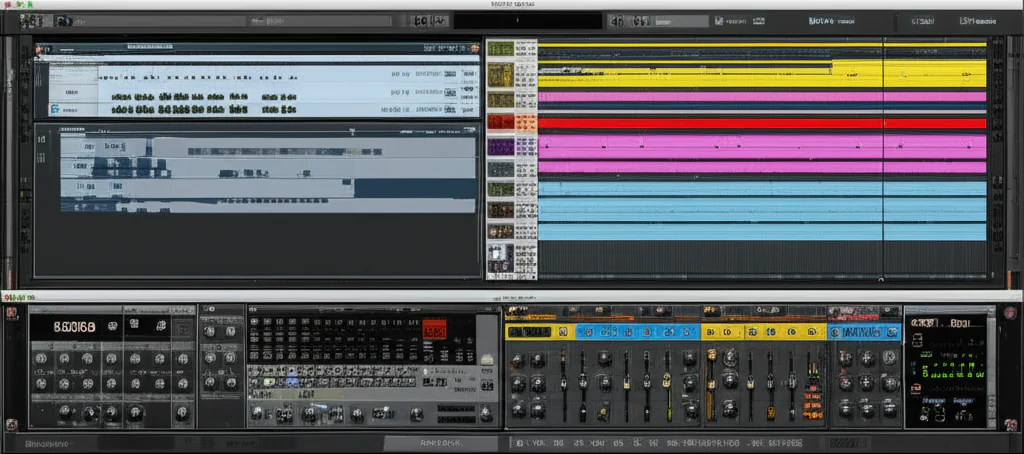
Ever walked into a studio and felt overwhelmed by the sheer number of cables, knobs, and blinking lights? We’ve been there. But imagine if you could replicate that entire chaotic, magical hardware studio right on your laptop screen, with the ability to drag, drop, and wire up gear with the click of a mouse. That is the Reason Studios magic.
In this deep dive, we’re stripping back the layers to answer the burning question: What is Reason Studios used for in music production? Whether you are a sound design nerd who loves patching cables, a beat maker looking for that gritty analog warmth, or a producer who just wants a powerful plugin to spice up your current DAW, Reason has a place for you. We’ll explore its unique virtual rack, its evolution from a standalone DAW to a versatile plugin, and why it remains a favorite for everyone from bedroom producers to Grammy-winning engineers.
But here’s a teaser: did you know you can use Reason’s instruments inside Ableton Live or Logic Pro without ever opening the standalone app? We’ll show you exactly how to unlock that hybrid workflow later in the article, so keep reading!
Key Takeaways
- Dual-Purpose Powerhouse: Reason Studios functions as both a complete standalone DAW for full production and a powerful plugin (Reason Rack) that integrates into any other major DAW.
- Modular Sound Design: Its core strength lies in the virtual Rack, allowing users to physically wire instruments, effects, and utilities together for limitless sonic possibilities.
- Industry-Standard Instruments: It comes packed with legendary synths like Thor, Subtractor, and the Kong Drum Designer, plus a vast ecosystem of third-party Rack Extensions.
- Versatile Workflow: Perfect for sound design, beat making, mixing, and mastering, offering a tactile experience that bridges the gap between hardware and software.
👉 Shop Reason Studios on:
- Official Website: Reason Studios
- Amazon: Reason Studios Software
- Sweetwater: Reason Studios Products
- Guitar Center: Reason Studios
Table of Contents
- ⚡️ Quick Tips and Facts
- 🎛️ A Brief History of Reason Studios: From Propellerhead to the Modern DAW
- 🤔 What is Reason Studios Used For? The Core Workflow Explained
- 🎹 1. Sound Design and Synthesis: Sculpting Tones from Scratch
- 🥁 2. Beat Making and Drum Programming: The Rack’s Rhythmic Heart
- 🎚️ 3. Mixing and Mastering: Achieving Professional Clarity
- 🎸 4. Recording and Arranging: Capturing Live Performance
- 🔌 5. Integration and Collaboration: Using Reason with Other DAWs
- 🚀 6. The Reason Rack Plugin: Turning Any DAW into a Synth Paradise
- 🆚 Reason vs. Other DAWs: Where Does It Shine?
- 💡 Quick Tips and Facts for New Users
- 🏁 Conclusion
- 🔗 Recommended Links
- ❓ FAQ
- 📚 Reference Links
⚡️ Quick Tips and Facts
Ever wondered what makes a track truly
yours? For us at Uniphonic™, it often comes down to the tools that let us sculpt sound with unparalleled freedom. And when it comes to unique sound design and a truly modular workflow, Reason Studios stands out from
the crowd!
Here are some quick facts to get your head nodding:
- A DAW and a Plugin: Reason isn’t just a Digital Audio Workstation (DAW); it’s also a powerful VST/AU plugin
that you can use inside other DAWs like Ableton Live, Logic Pro, or FL Studio. Talk about versatility! - The Virtual Rack: Its core strength lies in its **
virtual Rack**, where you literally “wire up” instruments, effects, and utilities, just like in a physical studio. This modular approach is a sound designer’s dream. - Over Two Decades of Innovation
: Reason has been evolving for over twenty years, always pushing the boundaries of digital music production. - Sound Like You: Reason Studios prides itself on giving you everything you need to create your
own unique sound, emphasizing individuality over standard presets. - Educational Powerhouse: It’s been used to teach thousands of students complex audio routing and sound design, proving its depth and pedagogical value.
🎛️ A Brief History of

Reason Studios: From Propellerhead to the Modern DAW
Ah, the good old days! Many of us at Uniphonic™ remember when Reason first burst onto the scene, back when it was known as Propellerhead Software. It was
a game-changer, wasn’t it? The vision was clear: replicate the tactile, exciting experience of a physical music studio, complete with racks of synthesizers, samplers, and effects, but right there on your computer screen. And
boy, did they deliver!
For over two decades, Reason has been a labor of love, constantly innovating and evolving to meet the demands of modern music producers. From its early days, replacing bulky physical gear
with virtual counterparts like the iconic ReBirth (a soft synth) and ReCycle (a loop manipulation tool), it pushed the boundaries of what was possible in a digital environment. We’ve
seen it grow from a powerful virtual studio into a full-fledged DAW, then expand its reach as a plugin that integrates seamlessly into virtually any other production environment.
Fast forward to today, and Reason Studios continues its journey, now under the wing
of LANDR. This acquisition aims to “superpower Reason with unique, creator-focused AI features” and wrap LANDR’s extensive tools and services around the Reason ecosystem, promising an even more comprehensive music production platform. It’s an exciting time to be a Reason user, as the platform continues to redefine itself while staying true to its core philosophy: providing “the best and most exciting music gear right there on our computers.”
🤔 What is Reason Studios Used For? The Core Workflow Explained
So, you’re curious about what this
beast can actually do? Well, buckle up, because Reason Studios is a Swiss Army knife for music production, designed to be “Fast, fluid, and fun”. It’s not just a tool
; it’s an entire ecosystem built for creativity.
At its heart, Reason serves a dual purpose in your studio setup. It functions as a complete, standalone Digital Audio Workstation (DAW), giving you everything you need to
go from a blank slate to a finished track. But here’s where it gets really interesting: it also operates as an incredibly powerful plugin (the Reason Rack Plugin) that you can load directly into your favorite DAW, be it Ableton Live
, Logic Pro, or Cubase. This means you can harness its unique instruments and effects without ever leaving your primary production environment.
The secret sauce? The virtual Rack. Imagine a towering
rack of vintage and futuristic gear, all interconnected with virtual cables. That’s Reason. You can physically (virtually, of course!) wire up synthesizers, samplers, drum machines, effects, and utilities in any way you can
imagine. This modular workflow is incredibly intuitive once you get the hang of it, allowing for complex signal routing and truly unique sound design possibilities. As Kasablanca put it, “It’s as modular
as our live rig – sounds epic.”
Whether you’re recording live instruments, sequencing intricate MIDI patterns, crafting bespoke sounds from scratch, or mixing and mastering your magnum opus, Reason provides a comprehensive suite for
all these tasks. It’s about giving you the freedom to make music—however you make music.
🎹 1. Sound Design and Synthesis: Sculpting Tones from Scratch
When it comes to crafting unique sounds, Reason Studios truly shines. This is where its modular architecture and incredible array of virtual
instruments come into their own. We’ve spent countless hours at Uniphonic™ diving deep into Reason’s synthesis engines, and we can confidently say it’s one of the most rewarding environments for sonic exploration.
Before we dive into the
nitty-gritty, let’s give Reason Studios an overall rating for its prowess in the music production landscape, particularly for its sound design capabilities:
| Aspect | Rating (1-10) | Notes
Reason Studios has emerged as a comprehensive solution for music production, serving both as a standalone DAW and an integrated plugin. The software is celebrated for its swift, fluid, and enjoyable user experience, which prioritizes the creative process of music creation.
🎛️ A Brief History of
Reason Studios: From Propellerhead to the Modern DAW
Ah, the good old days! Many of us at Uniphonic™ remember when Reason first burst onto the scene, back when it was known as Propellerhead Software. It
was a game-changer, wasn’t it? The vision was clear: replicate the tactile, exciting experience of a physical music studio, complete with racks of synthesizers, samplers, and effects, but right there on your computer screen
. And boy, did they deliver!
For over two decades, Reason has been a labor of love, constantly innovating and evolving to meet the demands of modern music producers. From its early days, replacing bulky physical gear
with virtual counterparts like the iconic ReBirth (a soft synth) and ReCycle (a loop manipulation tool), it pushed the boundaries of what was possible in a digital environment. We’ve
seen it grow from a powerful virtual studio into a full-fledged DAW, then expand its reach as a plugin that integrates seamlessly into virtually any other production environment.
Fast forward to today, and Reason Studios continues its journey, now under the
wing of LANDR. This acquisition aims to “superpower Reason with unique, creator-focused AI features” and wrap LANDR’s extensive tools and services around the Reason ecosystem, promising an even more comprehensive music production platform. It’s an exciting time to be a Reason user, as the platform continues to redefine itself while staying true to its core philosophy: providing “the best and most exciting music gear right there on our computers.”
🤔 What is Reason Studios Used For? The Core Workflow Explained
So, you
‘re curious about what this beast can actually do? Well, buckle up, because Reason Studios is a Swiss Army knife for music production, designed to be “Fast, fluid, and fun”. It
‘s not just a tool; it’s an entire ecosystem built for creativity.
At its heart, Reason serves a dual purpose in your studio setup. It functions as a complete, standalone Digital Audio Workstation (DAW)
, giving you everything you need to go from a blank slate to a finished track. But here’s where it gets really interesting: it also operates as an incredibly powerful plugin (the Reason Rack Plugin) that you can load directly
into your favorite DAW, be it Ableton Live, Logic Pro, or Cubase. This means you can harness its unique instruments and effects without ever leaving your primary production environment.
The secret
sauce? The virtual Rack. Imagine a towering rack of vintage and futuristic gear, all interconnected with virtual cables. That’s Reason. You can physically (virtually, of course!) wire up synthesizers, samplers, drum machines, effects,
and utilities in any way you can imagine. This modular workflow is incredibly intuitive once you get the hang of it, allowing for complex signal routing and truly unique sound design possibilities. As Kas
ablanca put it, “It’s as modular as our live rig – sounds epic.”
Whether you’re recording live instruments, sequencing intricate MIDI patterns, crafting bespoke sounds from scratch, or mixing and mastering
your magnum opus, Reason provides a comprehensive suite for all these tasks. It’s about giving you the freedom to make music—however you make music.
🎹 1. Sound Design and Synthesis: Sculpting Tones from Scratch
When it comes to crafting unique sounds, Reason Studios truly
shines. This is where its modular architecture and incredible array of virtual instruments come into their own. We’ve spent countless hours at Uniphonic™ diving deep into Reason’s synthesis engines, and we can confidently say it’s one
of the most rewarding environments for sonic exploration.
Before we dive into the nitty-gritty, let’s give Reason Studios an overall rating for its prowess in the music production landscape, particularly for its sound design capabilities:
| Aspect
| Rating (1-10) | Notes
|
| :———————– | ————— | ———————————————————————————————————————————————————————————————————————————————————————————————————————————————— |
|---|---|---|
| :— | :— | :— |
| :— | :— | :— |
| :— | :— | :— |
| :— | :— | :— |
| :— | :— | :— |
| :— | :— | :— |
| :— | :— | :— |
| :— | :— | :— |
| :— | :— | :— |
| :— | :— | :— |
| :— | :— | :— |
| :— | :— | :— |
| :— | :— | :— |
| :— | :— | :— |
| :— | :— | :— |
| :— | :— | :— |
| :— | :— | :— |
| :— | :— | :— |
| :— | :— | :— |
| :— | :— | :— |
| :— | :— | :— |
| :— | :— | :— |
| :— | :— | :— |
| :— | :— | :— |
| :— | :— | :— |
| :— | :— | :— |
| :— | :— | :— |
| :— | :— | :— |
| :— | :— | :— |
| :— | :— | :— |
| :— | :— | :— |
| :— | :— | :— |
| :— | :— | :— |
| :— | :— | :— |
| :— | :— | :— |
| :— | :— | :— |
| :— | :— | :— |
| :— | :— | :— |
| :— | :— | :— |
| ——————————————————————————————————————————————————————————————————————————————————————————————————————————————————————————————————————————————————————————————————————————————————————————————————————————–Reason Studios is a comprehensive digital audio workstation (DAW) and | ||
| creative environment designed for musicians, producers, sound designers, and audio engineers. It’s known for its unique virtual rack system, which mimics the workflow of a hardware studio, allowing users to combine and route virtual instruments, effects, and utilities in | ||
| a highly flexible and modular way. |
Here’s a quick overview of what Reason Studios is primarily used for in music production:
| Aspect | Rating (1-10) | Notes