
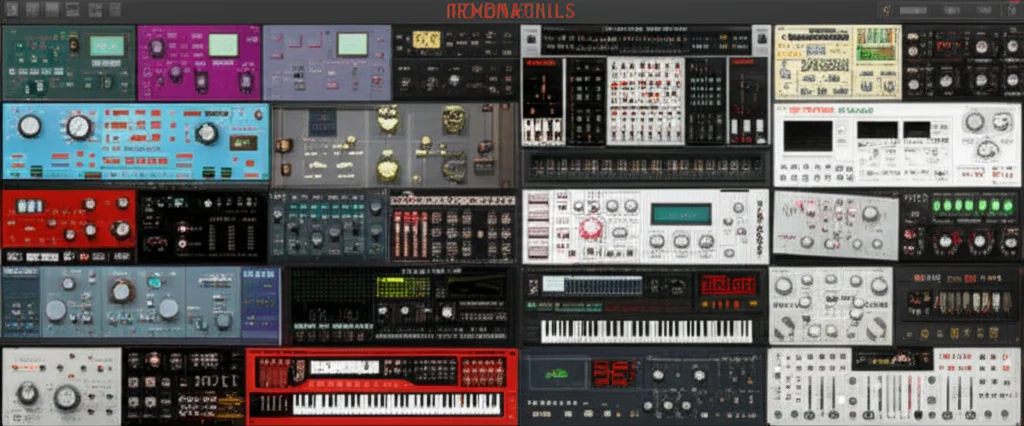

How can I use Reason Refills to expand my sound library and inspire new music ideas? Pick a ReFill that fills a genuine gap in your setup, then turn its patches, samples, and loops into fresh musical material by editing, layering, and playing them in unexpected ways. The goal isn’t to collect the biggest library; it’s to find sounds that get you writing.
We’ve opened sessions intending to audition one drum kit and, a few minutes later, found a strange metallic hit that became the seed of an entire track. That’s the sweet spot: use a ReFill as a creative prompt, not a folder you scroll through forever. Start with one sound, make a short musical sketch, and reshape the parts until they belong to you.
Key Takeaways
- Choose ReFills for a specific creative need—such as drums, playable synth patches, loops, or sound-design samples.
- Check the format, Reason compatibility, required devices, and license before downloading or buying.
- Make presets your own: change the performance, envelopes, filters, effects, rhythm, or arrangement.
- Use loops as writing prompts, then chop, rearrange, or replace them so your track develops its own identity.
- Browse with a purpose and save discoveries to spend more time making music and less time searching.
- Back up projects and note their ReFill dependencies so missing sounds don’t derail a session.
Table of Contents
- ⚡️ Quick Tips and Facts
- 🎛️ Reason Refills Explained: What They Are and How They Work
- Refills, sound libraries, and Reason devices
- Refills vs. Rack Extensions, sample packs, and VST instruments
- 📜 A Brief History of Reason Refills and the Reason Rack
- 🎹 Where to Find, Buy, and Download Reason Refills
- Official Propellerhead and Reason Studios Refills
- Third-party ReFills and trusted sound-library makers
- Free Refills: what to check before downloading
- 🧭 Install, Locate, and Organize Refills in Reason
- Opening and browsing ReFills in the Browser
- Managing files, backups, and missing sounds
- 🎨 Choose a ReFill That Fits Your Sound
- Match sounds to genre, mood, and production goals
- Check compatibility, formats, and system requirements
- Build a balanced sound library without collecting everything
- 💡 10 Ways to Use Reason Refills for Fresh Music Ideas
- 1. Start with an unexpected patch
- 2. Turn a loop into a song seed
- 3. Build a beat around a new drum kit
- 4. Resample and reshape a one-shot
- 5. Layer presets into a signature sound
- 6. Make a familiar instrument feel unfamiliar
- 7. Use combinators to create playable textures
- 8. Turn a sound-design patch into a rhythmic part
- 9. Set a Refills-only creative challenge
- 10. Save and revisit your favorite discoveries
- 🎚️ Make ReFill Sounds Your Own: Editing, Layering, and Effects
- Tweak synth patches and sampler instruments
- Shape loops and samples with Reason’s effects
- Use the Rack to experiment with signal flow
- 🆕 Reason 14, Refills, and the Modern Reason Workflow
- 🔌 Use Reason Refills in the Reason Rack Plugin
- Using the Rack Plugin inside another DAW
- Keep projects portable across computers
- 🏠 Use Reason Refills in the Standalone Reason DAW
- Create a track from a patch, loop, or sample
- Save projects with the sounds they need
- 🔊 Troubleshooting Refills and Missing Sounds
- A ReFill will not install or appear in the Browser
- A project opens with missing patches or samples
- Compatibility and authorization problems
- ✅ Quick Tips for Better ReFill Browsing and Music Making
- 🏁 Conclusion
- 🔗 Recommended Links
- ❓ FAQ
- 📚 Reference Links
⚡️ Quick Tips and Facts
If you’ve ever opened a project, scrolled through hundreds of sounds, and somehow ended up playing the same old two-note bassline, a well-chosen ReFill can help. Our guide to Reason Refills and sound libraries covers the basics; here, we’ll focus on turning that expanded library into actual musical ideas.
| Quick fact | What it means for your workflow |
|---|---|
| A ReFill is a Reason sound-library package | It can contain patches, samples, loops, and other content designed for Reason devices. What’s inside varies by ReFill. |
| Refills are creative starting points, not finished songs | A preset can get you moving quickly, but changing its notes, envelope, effects, or rhythm makes it yours. |
| Reason can run standalone or as a Rack Plugin | Use Reason’s DAW, or bring the Rack into a compatible host such as Ableton Live, Logic Pro, or Cubase. Check current Reason 14 product information for supported formats and requirements. |
| Browse before you buy | Check the content list, supported Reason version, file size, and licensing terms. A dramatic demo is not a substitute for knowing what the library actually contains. |
| One sound can spark an entire arrangement | A strange percussion loop may suggest a tempo; a sustained pad may suggest the harmony; a single sample may become the hook. |
Our quickest creative exercise: choose one unfamiliar patch, write an eight-bar idea around it, and change at least three things before saving: the rhythm, the sound’s envelope, and its role in the arrangement. That tiny rule helps prevent “preset auditioning” from eating the whole session. 🎛️
🎛️ Reason Refills Explained: What They Are and How They Work
A Reason ReFill is a packaged collection of content for use in Reason. Depending on the library, it may include instrument patches, drum sounds, samples, loops, or combinator patches. Think of it as a stocked workshop: the parts are ready, but you still decide what to build.
Reason Studios describes Reason 14 as a standalone DAW and a Rack Plugin, with instruments and effects that can be combined in its virtual Rack. Its product page also promotes a library of more than 30,000 device patches, loops, and samples. That figure refers to Reason’s broader sound library, not to one ReFill, and the contents of individual packages differ. See the Reason 14 product page for the current product description.
Refills, sound libraries, and Reason devices
A ReFill’s contents are useful only when you know how they connect to Reason’s instruments and samplers.
| Content type | Typical use | Creative move |
|---|---|---|
| Instrument patches | Load a designed sound into a supported Reason instrument | Change the modulation, filter, envelope, or playing style |
| Samples and one-shots | Use individual hits, textures, or recordings in a sampler or drum device | Pitch, stretch, reverse, filter, or layer them |
| Loops | Start with a rhythmic or musical phrase | Chop it, rearrange it, or use it as a temporary writing prompt |
| Combinator patches | Combine multiple devices into one playable setup | Map controls to make a complex sound easier to perform |
| Impulse responses or other specialized content | Shape effects or provide a particular sound-design resource | Compare the result with a standard reverb or effect |
The exact supported devices depend on the package and your Reason version. Read the product description before buying rather than assuming every patch works in every instrument.
Producer perspective: presets are particularly helpful when you want to write, not spend an hour programming a synth from an initialized patch.
Sound-designer perspective: raw samples and editable patches offer more room to transform a sound than a polished loop that already has a strong identity.
Working-musician perspective: a library is valuable when it speeds up a real task—finding a usable snare, building a playable keyboard sound, or getting a track moving.
Refills vs. Rack Extensions, sample packs, and VST instruments
These terms overlap in marketing, but they do not mean the same thing.
| Format | What it generally provides | Main consideration |
|---|---|---|
| Reason ReFill | A Reason-oriented content package, such as patches, samples, and loops | Verify Reason version and device compatibility |
| Rack Extension | A device that adds an instrument or effect to Reason’s Rack | Check device and account compatibility |
| VST instrument or effect | A plugin used in compatible DAWs | It may not run inside Reason unless supported and used in a compatible setup |
| General sample pack | Audio files such as WAV one-shots and loops | Often usable in many samplers and DAWs, but not necessarily arranged as Reason patches |
| DAW sound library | Content made for a particular software ecosystem | Confirm whether its files can be exported or used elsewhere |
Reason’s own Rack Plugin information explains the Rack’s role in other DAWs. For more context on choosing between instruments and software formats, see our hardware-versus-software guide.
📜 A Brief History of Reason Refills and the Reason Rack

Reason’s identity has long centered on a virtual Rack: instruments, effects, and utility devices connected in a visible signal chain. ReFills grew naturally from that setup, giving users a way to add organized sound content to their Reason sessions.
Reason has changed over time, so legacy instructions and product names may not match the current interface. Older tutorials can still teach useful techniques, but check the version shown in the tutorial against your installed software. Reason Studios’ Reason 14 product page is the better place to verify current features.
The Rack itself remains a useful sound-design metaphor. Instead of treating a preset as a sealed box, you can inspect the devices, see how they connect, and experiment with the signal flow. One sound can become a new instrument simply by routing it through a different chain.
🎹 Where to Find, Buy, and Download Reason Refills
Start with the official Reason Studios shop, then compare reputable third-party libraries. Before downloading, check whether the package is actually a Reason ReFill or a general sample pack marketed to Reason users.
Official Propellerhead and Reason Studios Refills
Propellerhead Software became Reason Studios, so older products may still use the Propellerhead name in their documentation or filenames. Look for the official Reason Studios shop and the current Reason 14 product details.
Before purchasing, confirm:
- What is included: patches, samples, loops, or a mixture?
- Which Reason versions are supported?
- Which devices are required?
- Can the content be used commercially?
- Is the download a ReFill, a Rack Extension, or audio files?
- Does the seller provide installation or compatibility instructions?
Third-party ReFills and trusted sound-library makers
Third-party libraries can offer focused genres, unusual instruments, or specialized sound design. For example, the MSXII Audio collection includes drum kits and sample products designed for music-making workflows.
The tutorial “MSXII Drumkits and Sample Packs Tutorial” demonstrates how MSXII kits can be used in a Reason environment. It is a practical example of turning kit content into a working session, though you should still check the current product page format and compatibility details.
Use the following checklist when evaluating any third-party package:
- Inspect the audio previews. Listen for sounds you would genuinely use, not just an impressive demo mix.
- Read the content list. A library with many files may still offer little variety if most are near-duplicates.
- Confirm the format. Check whether it includes a Reason ReFill, WAV files, or both.
- Check the license. Look for rules covering commercial releases, redistribution, and use in sample-based compositions.
- Review support information. A clear installation guide is a good sign; vague compatibility claims are not.
- Audition in context. A kick that sounds huge solo may disappear under a bass line—or swallow it whole.
For more sound-library ideas, browse our Reason Refills category and plugin recommendations.
Free Refills: what to check before downloading
Free content can be excellent for experimentation, but “free” does not tell you whether it is safe, well documented, or compatible.
✅ Good signs
- The creator’s site clearly identifies the file format and supported software.
- Licensing terms explain whether commercial use is allowed.
- There are audio previews and a content list.
- The download comes directly from the creator or a reputable distributor.
❌ Red flags
- No license information.
- No mention of Reason version or required devices.
- A download page that makes unrelated installer software seem mandatory.
- Unclear claims about commercial rights.
If a free package is a collection of WAV files rather than a ReFill, you may still be able to load them into a Reason sampler. That can be a perfectly useful workflow; just do not assume the files will appear as ready-made Reason patches.
🧭 Install, Locate, and Organize Refills in Reason
A well-organized library makes experimentation faster. A badly organized one turns a creative session into digital archaeology. 🕵️
Opening and browsing ReFills in the Browser
Reason’s Browser helps you search and browse content by details such as name, type, category, and tags. The available filters and interface can vary by version, so consult the Reason 14 product information and the support pages linked from Reason Studios.
A simple browsing routine:
- Open the Browser in Reason.
- Choose a broad sound category such as bass, drums, keys, or textures.
- Narrow your search with a useful keyword or tag.
- Audition a small batch rather than previewing everything.
- Load the strongest candidate into a device.
- Play it in context with the tempo, key, and arrangement you are working on.
- Save or favorite useful sounds using the features available in your version.
A name like “Wide Analog Pad” tells you more than “Preset 031,” but trust your ears over labels. Tags can point you in a direction; they cannot write the chorus.
Managing files, backups, and missing sounds
Keep downloaded libraries in a predictable location and avoid moving a ReFill after you have built projects that depend on it. If you do move content, reopen your project and confirm that the sounds still load.
Practical organization system:
- Make folders for official libraries, third-party ReFills, and lose audio samples.
- Preserve the original downloaded file in a backup location.
- Give folders descriptive names, including the maker or collection.
- Keep a text note with the license, source, Reason version, and installation date.
- Back up the library alongside your projects, especially before moving to a new computer.
- When collaborating, share only content you are licensed to distribute.
Reason projects can depend on external library content. Before archiving or transferring a session, verify that the destination computer has the required ReFills and devices. This avoids the classic studio surprise: the project opens, but the best sound has gone on holiday.
🎨 Choose a ReFill That Fits Your Sound
A useful ReFill is not simply large. It gives you sounds that fit your music, workflow, and appetite for editing.
Match sounds to genre, mood, and production goals
Genre labels can be helpful, but they are not rules. A cinematic texture library may give an electronic producer a fresh pad; a hip-hop drum kit may give a pop songwriter a more human-feling groove.
Ask yourself:
- What is missing from my current library? A specific instrument, a better drum palette, vocal textures, or raw material for sound design?
- Do I want playable sounds or audio building blocks? Patches are ready to perform; samples are more open-ended.
- Do I need loops or individual hits? Lops can spark an arrangement; one-shots give you more rhythmic control.
- Is the library too polished for my project? A heavily processed sound can be difficult to fit into a mix.
- Will I actually browse it? A focused library is often easier to use than a sprawling folder of vaguely named files.
For production workflow ideas, our music production techniques collection covers arrangement and sound-shaping approaches.
Check compatibility, formats, and system requirements
Before installing, check the library’s format, required Reason version, required devices, and storage needs. Larger libraries may require more disk space and can benefit from having enough system memory available, as Reason Studios notes for demanding ReFills in its Reason 14 product information.
| Check | Why it matters |
|---|---|
| Reason version | Older patches may not behave exactly the same in newer software, and newer content may require a recent version |
| Required device | A patch can depend on a specific Reason instrument or Rack Extension |
| File format | ReFill packages and loose WAV files are handled differently |
| Storage size | Large sample collections need room for installation and backups |
| License | Commercial-use permissions vary by maker |
| Operating system and host | The Reason app or Rack Plugin must work with your system and DAW |
Build a balanced sound library without collecting everything
A balanced library gives you enough contrast to make choices without burying you in options.
Try building around functional roles:
- Foundation: dependable kicks, snares, basses, and basic keys.
- Character: unusual percussion, expressive leads, and distinctive textures.
- Transformation: samples or patches you can reshape extensively.
- Utility: clean sounds that are easy to layer or process.
- Inspiration: odd, beautiful, or imperfect sounds that make you stop scrolling.
One of our producers once bought a huge collection for “more options,” then spent a session searching for a simple, dry clap. The lesson: library size is not the same as useful choice. Keep a shortlist of your go-to sounds, and add new collections to solve a real creative gap.
💡 10 Ways to Use Reason Refills for Fresh Music Ideas
Here are ten ways to turn a library into a writing partner instead of a digital museum.
1. Start with an unexpected patch
- Filter for a sound category you rarely use.
- Pick a patch without reading its full name first.
- Play a simple motif at a comfortable tempo.
- Record the first phrase that feels promising.
- Change one or two parameters to make it sit in your track.
This is especially effective when you normally begin with drums or piano. A strange pad may suggest a chord; an odd lead may suggest the rhythm.
2. Turn a loop into a song seed
Load a loop and use it as a temporary composition prompt, not a rulebook.
- Find its tempo and tonal center as best you can.
- Write a new bass line or chord progression around it.
- Duplicate the loop and try different edits in each section.
- Remove the original loop once the song has its own identity—or keep a tiny fragment as a texture.
- Check the result for unwanted clashes in timing or pitch.
Loops can help you get past the blank-page problem. They can also make every bar feel pre-decided. Chop, mute, or rearrange them so the groove becomes yours.
3. Build a beat around a new drum kit
Start with one anchor sound, such as a kick or snare, then build around its character.
- Choose a tempo that makes the kit feel natural.
- Program a sparse groove first.
- Add accents with lighter hits rather than adding more layers everywhere.
- Compare the kit’s bass-heavy and high-frequency sounds against your existing samples.
- Adjust velocities or timing where the device and performance allow.
The MSXII Drumkits and Sample Packs Tutorial offers a useful walkthrough of bringing MSXII kits into a Reason session. It is especially helpful if you want to see a drum-library workflow rather than just hear a polished demo.
4. Resample and reshape a one-shot
A single hit can become a bass, a pad, or a sound effect.
- Load a one-shot into a Reason sampler.
- Change its pitch and playback direction if appropriate.
- Adjust the start point and envelope.
- Add filtering, delay, distortion, or reverb.
- Record or resample the result for another round of processing.
A short metallic hit, stretched and reverberated, can become a shimmering background layer. A low tom can become a pulsing synth-like bass. That is the fun of samples: they rarely respect their job title.
5. Layer presets into a signature sound
Choose two sounds that perform different roles rather than two sounds that compete.
- Use one layer for attack and another for sustain.
- Keep the low end focused; avoid stacking several powerful bass layers.
- Pan or widen only when it supports the arrangement.
- Use EQ or filtering to make room between layers.
- Save the combined setup as a reusable patch or project element if your workflow supports it.
The best layers often sound unimpressive alone and excellent together. Solo buttons can mislead; the full mix gets the final vote.
6. Make a familiar instrument feel unfamiliar
Take a recognizable patch and alter its context:
- Play it in an unexpected register.
- Change the rhythm or note length.
- Use an unusual scale or interval pattern.
- Put it through an effect chain it was not designed for.
- Use a short excerpt as a rhythmic sound rather than a sustained instrument.
A clean keyboard patch can turn into a percussive motif with a short envelope. A bright pluck can become a soft pad through longer attack and reverb. Small changes in playing can be just as powerful as deep synthesis.
7. Use combinators to create playable textures
A Combinator patch can group instruments and effects into a larger playable setup. Load a patch, identify the main layers, and try the mapped controls before rebuilding anything.
For a more expressive texture:
- Start with a clear central sound.
- Add a contrasting layer, such as noise, a subtle pad, or a transient.
- Balance their levels.
- Map useful parameters to performance controls when available.
- Play dynamically rather than holding one static chord.
Reason Studios highlights the Rack’s ability to combine devices and encourage unexpected combinations in its Reason 14 overview. The compositional payoff is simple: one playable sound can behave like a small ensemble.
8. Turn a sound-design patch into a rhythmic part
If a patch feels too abstract, give it a pulse.
- Use short notes or repeated MIDI patterns.
- Apply rhythmic gating or tempo-synced modulation where the device supports it.
- Add a delay with a musical subdivision.
- Automate a filter or effect amount over a phrase.
- Contrast regular repetition with a few intentional gaps.
The silence between hits is part of the groove. Leave room for it.
9. Set a Refills-only creative challenge
Choose a short time limit and a rule set:
- One ReFill only.
- One drum sound and one instrument patch.
- No browsing after the first ten minutes.
- Finish a verse, cue, or loop before editing.
- Use at least one sound in a way its name does not suggest.
Constraints are not creativity’s enemy; they are often the bouncer keeping indecision out of the club. 🎚️
10. Save and revisit your favorite discoveries
Create a small “discovery” project or preset collection. Save the source library name, device, and any changes you made. Later, revisit the sound in a different tempo or genre.
A patch that did not fit yesterday’s track might become the hook in next week’s session. The best discoveries often need a second meeting.
🎚️ Make ReFill Sounds Your Own: Editing, Layering, and Effects
A preset is a starting point, not a sound-design boundary. The fastest route to an original result is to make a few purposeful changes instead of turning every knob until something catches fire.
Tweak synth patches and sampler instruments
Work in this order:
- Performance: change notes, velocity, timing, or articulation.
- Envelope: adjust attack, decay, sustain, or release to change the sound’s shape.
- Filter: remove harshness, soften a sound, or emphasize its brightness.
- Modulation: create movement through a parameter that changes over time.
- Effects: add space, delay, distortion, or modulation effects.
- Level: match the sound’s volume before and after processing so loudness does not fool your judgment.
For samples, experiment with start and end points, pitch, playback direction, and playback behavior where the instrument allows it. Keep a copy of the original patch before making large edits.
Shape loops and samples with Reason’s effects
A loop does not have to remain a loop, and a sample does not have to remain recognizable.
- Filter out unnecessary low frequencies from non-bass layers.
- Use short reverb for a sense of space without washing out transients.
- Try delay for rhythmic detail.
- Use distortion or saturation to add edge, but check that the sound remains clear.
- Automate an effect for transitions rather than leaving it fully engaged throughout.
- Reverse or stretch material only when the result supports the track’s timing and mood.
Reason 14’s product page promotes the RV-9 Reverb Station, including algorithms aimed at rooms, expansive spaces, and more unusual textures. It also lists new impulse responses for the RV700. Check the Reason 14 feature page for current availability and version-specific details.
Use the Rack to experiment with signal flow
The Rack makes signal flow visible, so you can test ideas by changing what processes what.
- Try placing distortion before reverb for a different result than distortion after reverb.
- Split a sound into layers and process each differently.
- Use a utility device to control level or routing when needed.
- Bypass devices one at a time to hear what each contributes.
- Save a new patch or project version before major changes.
Reason Studios’ Rack Plugin overview explains how the Rack can work within another DAW. For more ways to shape performance and arrangement, see our performance techniques articles.
🆕 Reason 14, Refills, and the Modern Reason Workflow
Reason 14 pairs its library and Rack workflow with updated instruments, effects, and browsing features. Reason Studios lists 900+ drum samples, 50 new Europa patches, and 20 new RV700 impulse responses among the additions on its Reason 14 product page.
It also describes Browser filtering by name, type, category, and tags, plus the ability to open the Rack and browse or tweak devices through the Track Panel. The useful point is not the feature list by itself; it is the reduced friction between hearing an idea and trying it.
| Reason 14 element | How it may help your sound exploration |
|---|---|
| Browser filters | Narrow a large library by sound type or category |
| Europa patches | Provide playable synth starting points to edit |
| Drum samples | Offer fresh material for beats and percussion layers |
| RV700 impulse responses | Extend the range of spaces available to that effect |
| RV-9 Reverb Station | Explore room, spatial, and more experimental reverb flavors |
| Rack in the Track Panel workflow | Browse and tweak without abandoning the track-focused view |
The exact library and device availability depends on the Reason version, license, and installed content. If you are considering an upgrade, check the current official product page instead of relying on an older tutorial or forum post.
🔌 Use Reason Refills in the Reason Rack Plugin
The Reason Rack Plugin lets you use Reason instruments and effects within a compatible host DAW. It is useful if your main workflow lives in Ableton Live, Logic Pro, Cubase, or another supported environment. Confirm plugin formats and host compatibility on the official Reason Rack Plugin page.
Using the Rack Plugin inside another DAW
A straightforward workflow:
- Open your host DAW and create a compatible instrument or effect track.
- Insert the Reason Rack Plugin.
- Browse to the patch or sample content you want to use.
- Play or sequence the sound from the host.
- Record MIDI and automation in the host where supported.
- Save the project and confirm the Rack Plugin recalls the correct patch and library.
If a ReFill depends on a particular Reason device, that device must also be available in your setup. The Rack Plugin does not turn every unrelated Reason file into a universally compatible plugin preset.
Keep projects portable across computers
For collaboration or long-term archiving:
- Note which ReFills and Rack Extensions the project uses.
- Keep a copy of the project’s audio renders or stems as a safety measure.
- Do not distribute commercial libraries unless their license allows it.
- Test the project on another system before a deadline.
- Keep the original source files intact.
The safest mix of portability and flexibility is usually a saved project plus clearly labeled audio stems. You can reopen the Rack for edits while still having a reference render if a device or library is unavailable later.
🏠 Use Reason Refills in the Standalone Reason DAW
In the standalone Reason DAW, the Browser, Rack, sequencer, and mixer come together in one application. That makes it easy to audition a patch, record a phrase, and build an arrangement without changing software.
Create a track from a patch, loop, or sample
For an instrument patch:
- Find the patch in the Browser.
- Load it into the appropriate instrument or track.
- Play a short phrase and adjust the sound to fit the song.
- Record MIDI or program notes in the sequencer.
- Add effects only after the part works musically.
For a loop or sample:
- Identify whether it is a loop, one-shot, or texture.
- Add it to a suitable track or sampler.
- Check its timing against the project tempo.
- Edit or arrange it to avoid a static, copy-pasted feel.
- Process it to fit the mix.
Reason’s Browser and Rack workflow are designed to connect sound discovery with device editing; see the official Reason 14 overview for current details.
Save projects with the sounds they need
Before sharing or archiving a project, open it again and check for missing content. Record the ReFill name and the required Reason devices in your project notes. If a session is for a client or collaborator, render a reference audio file and keep stems where appropriate.
A small habit that saves big headaches: create a “project dependencies” note for any session using third-party content. List the library and device, not just the preset name. “Dream Pad 12” is not very helpful when three different libraries contain something called Dream Pad.
🔊 Troubleshooting Refills and Missing Sounds
Most ReFill problems come down to one of four things: the file is in the wrong format, the library is not installed or visible, a required device is missing, or the project has been moved away from its content.
A ReFill will not install or appear in the Browser
Try these checks in order:
- Confirm the download completed. Incomplete archives can fail to open.
- Check that it is a Reason ReFill. A folder of WAV files will not necessarily install like a ReFill.
- Read the maker’s installation instructions. Third-party packaging differs.
- Restart or refresh Reason’s Browser if the content was added while the app was open.
- Check the file location and permissions.
- Confirm your Reason version supports the content.
- Contact the creator or Reason Studios support if the file is damaged or the instructions do not match your setup.
A project opens with missing patches or samples
- Verify that the ReFill is installed on the current computer.
- Check whether the project expects a different library version.
- Restore any moved or renamed library files.
- Confirm that the required Rack Extension or device is available.
- Open a backup or earlier project version if the session was recently changed.
- Ask the project’s creator for a list of required content.
A missing patch can sometimes be replaced with a similar sound, but a missing sample may change the rhythm or character significantly. If exact recall matters, keep a render or audio stem with the project.
Compatibility and authorization problems
If a library or Rack Extension asks for authorization, follow the vendor’s official account and support instructions. Avoid unofficial installers or copied libraries: besides legal and security risks, they can make project reliability worse.
For current compatibility and software requirements, check Reason Studios’ official support and product pages, then check the ReFill maker’s own documentation. The library creator is the best authority on that library’s license and packaging.
✅ Quick Tips for Better ReFill Browsing and Music Making
- Browse with a purpose. Search for a sound role, not just “something cool.”
- Set a timer. Stop auditioning when you find a sound that serves the song.
- Write before you tweak endlessly. A basic musical phrase tells you more than solo auditioning.
- Keep a shortlist. Save favorite patches and note which ReFill they came from.
- Choose focused libraries. A collection that solves a real need is more valuable than one that only increases the file count.
- Check the license and compatibility first. Particularly for third-party and free downloads.
- Use the Rack as a creative instrument. Reorder, layer, and route devices to produce new results.
- Keep original versions. Duplicate patches or projects before extensive sound design.
- Make room for happy accidents. Try a sound outside its apparent genre or intended role.
- Finish small ideas. An eight-bar sketch teaches you more than an hour of browsing.
- Back up your content. Your project should not depend one unprotected drive.
- Trust the arrangement. A sound that dazzles solo may not belong in the song.