
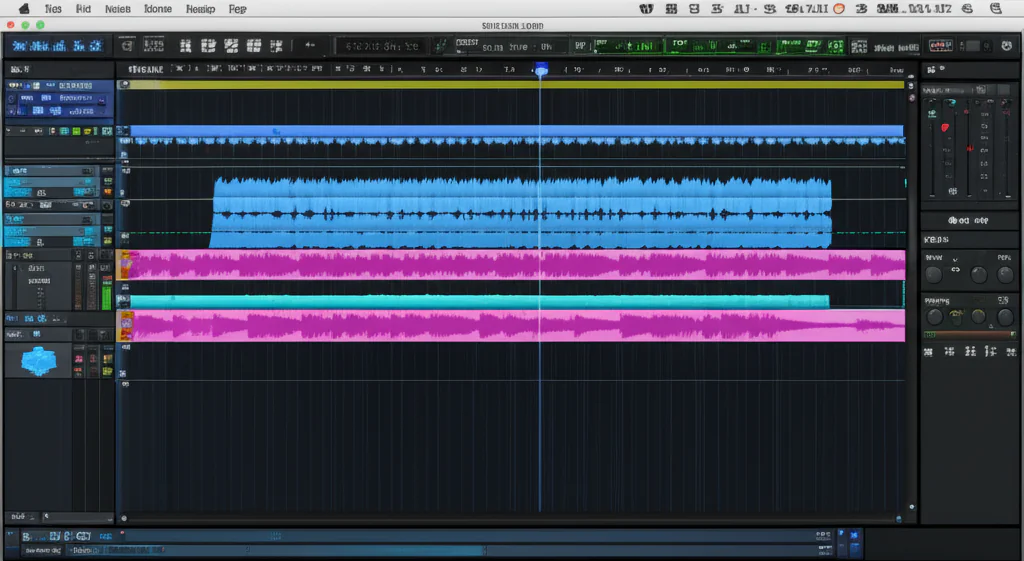
Ever tried to edit a vocal track in a DAW that feels like it’s fighting you at every turn? We’ve been there. At Uniphonic™, we’ve spent countless hours wrestling with rigid workflows, only to find our sanctuary in the chaotic beauty of Reason audio editing tools. Unlike standard DAWs that hide your signal chain behind menus, Reason invites you to pull back the curtain, literally flipping your rack upside down to see the virtual patch cables connecting your effects. Did you know that the unique “Scream 4” distortion unit in Reason is so beloved by producers that it’s often emulated by third-party plugins, yet nothing quite captures its raw, gritty character?
In this deep dive, we’re not just listing features; we’re revealing the 7 essential techniques and tools that turn Reason from a quirky novelty into a professional sound design powerhouse. From mastering the Rex loop slicing magic to building custom Combinator chains that would make a hardware engineer wep with joy, we’ll show you how to unlock the full potential of this unique ecosystem. Whether you’re a seasoned veteran or just dipping your toes into the virtual rack, you’ll discover why this software remains a secret weapon for top-tier producers.
Key Takeaways
- Unique Workflow: Master the Tab key to access the back-of-rack view, enabling manual signal routing that creates impossible sound chains.
- Powerful Slicing: Leverage Rex loops and Simpler to turn static audio into playable, dynamic MIDI instruments in seconds.
- Hybrid Flexibility: Combine the track-centric arrangement of modern DAWs with the modular sound design of the classic rack.
- Community Ecosystem: Tap into thousands of free Combinator presets and Refills to instantly expand your sonic palette.
- Future-Ready: Explore the latest Reason 14 features, including the RV-9 Reverb Station and seamless VST3 integration.
👉 Shop Reason Studios Products & Accessories:
- Reason Studios: Official Website | Amazon Search | Sweetwater
- Audio Interfaces: Search on Amazon | Guitar Center
- MIDI Controllers: Search on Sweetwater | Plugin Boutique
Table of Contents
- ⚡️ Quick Tips and Facts
- 🕰️ The Evolution of Reason: From Rack to DAW
- 🎛️ Mastering the Virtual Rack: Core Audio Editing Tools
- 🎚️ Advanced Audio Manipulation and Processing
- 🎹 Integrating MIDI and Audio Workflows
- 🔌 Expanding Your Sound: Third-Party Plugins and Rewire
- 🆚 Reason vs. Other DAWs: A Comparative Analysis
- 🛠️ Troubleshooting Common Audio Editing Issues
- 🚀 7 Pro Tips to Supercharge Your Reason Editing Speed
- 👥 Reason Users · Join the Community
- 🏁 Conclusion
- 🔗 Recommended Links
- ❓ FAQ
- 📚 Reference Links
⚡️ Quick Tips and Facts
Before we dive into the deep end of the Reason Studios ecosystem, let’s hit the ground running with some high-impact facts that every producer should know. If you’re wondering why Reason audio editing tools feel so different from your standard DAW, it’s because they were built on a philosophy of creative freedom rather than rigid industry standards.
- The “Rack” is King: Unlike other DAWs where plugins are hidden in menus, Reason’s virtual rack lets you see and wire every cable, synth, and effect in real-time. It’s like having a physical studio on your laptop.
- Rearview Mode: Ever wanted to see the back of your gear? Hit
Tabto flip the rack and manually route cables between devices. This is the secret sauce for creating unique signal chains you can’t get anywhere else. - Audio-to-MIDI Magic: Reason’s Simpler and Rex loops allow for incredible audio slicing. You can turn a drum loop into a MIDI drum kit in seconds.
- Sequencer Evolution: With Reason 14, the software shifted to a track-centric workflow, making audio editing feel more like a traditional DAW while keeping the rack’s soul intact.
- Community Power: The Reason Users community is legendary for sharing “Rack Presets” that act as pre-wired sound design labs.
Did you know? Producer Ian Kirkpatrick (known for Dua Lipa and Lizzo) once joked, “I love Reason so much, I almost got a Reason tattoo.” That’s the kind of loyalty this software inspires!
If you want to dive deeper into the history of this unique beast, check out our full breakdown on Reason Studios.
🕰️ The Evolution of Reason: From Rack to DAW
The story of Reason audio editing tools is a tale of two eras: the Rack Era and the DAW Era. When Reason first launched over 20 years ago, it wasn’t a full DAW; it was a virtual rack that could only record audio if you used a separate program (via ReWire). It was a “labor of love” designed to replicate the tactile experience of a hardware studio.
The Shift to a Full DAW
For years, purists argued that Reason was “just a rack.” But with the release of Reason 10 and the massive overhaul in Reason 12 and 14, the software finally embraced the role of a full Digital Audio Workstation.
- Track View: The interface now prioritizes the sequencer, making it easier to edit audio clips, automate parameters, and manage large projects.
- Audio Recording: You can now record audio directly into the timeline without external routing.
- Collaboration: Features like Reason+ (the subscription model) allow for cloud collaboration, bridging the gap between the isolated rack and the modern cloud workflow.
Why the Change Matters
This evolution didn’t kill the soul of Reason; it supercharged it. You still get the modular routing of the old days, but now you have the non-linear editing capabilities of modern DAWs like Ableton Live or Logic Pro.
Uniphonic™ Insight: We’ve seen producers struggle for years trying to make Reason “act like” a standard DAW. The trick is to stop fighting the workflow. Embrace the track-centric view for arrangement, then dive into the Rack for sound design. It’s a hybrid approach that yields the best results.
For more on how software has evolved, explore our guide on Hardware vs Software.
🎛️ Mastering the Virtual Rack: Core Audio Editing Tools
This is where the magic happens. The virtual rack is the heart of Reason audio editing tools. It’s not just a list of plugins; it’s a modular playground where you can connect a compressor to a reverb, then route that signal to a delay, and finally send it to a limiter—all with virtual patch cables.
The “Tab” Workflow
The most powerful feature in Reason is the ability to press Tab to view the back of the rack.
- Manual Routing: You can route audio from any output of any device to any input of any other device.
- Side-Chaining: Need to side-chain a compressor? Just plug the side-chain input of the compressor into the output of your kick drum. No complex menu diving required.
- Parallel Processing: Create parallel compression chains easily by splitting the signal and recombining it later.
Essential Devices for Editing
While Reason comes with a massive suite of instruments, the audio editing power lies in these specific devices:
| Device Name | Primary Function | Best For |
|---|---|---|
| Scream 4 | Distortion & Modulation | Agressive sound design, vocal processing |
| RV-70 | Advanced Reverb | Creating massive, cinematic spaces |
| MClass Mastering | Mastering Suite | Final polish and limiting |
| Compressor | Dynamics Control | Glue compression and leveling |
| Parametric EQ | Frequency Shaping | Surgical cuts and boosts |
| RV-9 Reverb Station | New in Reason 14 | Modern, algorithmic reverb textures |
Real-World Application
Imagine you have a dry vocal track. In a standard DAW, you might insert a chain of plugins. In Reason, you can build a custom vocal chain in the rack:
- Insert a Compressor to tame dynamics.
- Add an EQ to cut muddy frequencies.
- Route the signal to a Scream 4 for subtle saturation.
- Send an aux send to a RV-70 for a lush reverb.
- Tab over and route the reverb return to a Delay for a rhythmic echo.
This level of control is unmatched. For more on building custom chains, check out our Plugin Recommendations.
Pro Tip: Don’t just use the default settings. The Scream 4 is a beast for creating “bit-crushed” textures that sound like they came from a 90s video game. Try the “Punch” setting on drums!
🎚️ Advanced Audio Manipulation and Processing
Once you’ve mastered the basics, Reason audio editing tools open up a world of advanced manipulation. This is where you move from “editing” to “sound design.”
Audio Slicing and Rex Lops
One of Reason’s most powerful features is its handling of Rex loops. When you import an audio file, Reason can automatically detect transients and slice the audio into individual hits.
- Automatic Detection: Reason analyzes the waveform and places slice markers at drum hits or note onsets.
- Stretch Types: You can change how the audio is stretched. Options include:
Allround: Good for general loops.
Melody: Preserves pitch for melodic content.
Vocal: Optimized for vocal phrasing. - Manual Adjustment: If the auto-slice misses a beat, you can manually move the slice markers.
Video Insight: As demonstrated in the featured video on audio slicing, this process allows you to turn a static loop into a dynamic, playable instrument. You can drag the slices into the Drum Rack or NN-XT sampler to trigger them via MIDI.
Granular Synthesis and Time-Stretching
Reason’s Granular Synth and Time Stretch algorithms are top-tier.
- Granular Synthesis: Break audio down into tiny grains and rearrange them to create ethereal pads or glitchy textures.
- Time-Stretching: Change the tempo of a loop without affecting the pitch. This is crucial for fitting samples into your project’s BPM.
The RV-9 Reverb Station
Introduced in Reason 14, the RV-9 Reverb Station is a game-changer for audio editing. It offers:
- Algorithmic Precision: High-quality reverb algorithms that sound natural.
- Modulation: Built-in modulation to create movement in the reverb tail.
- Integration: Seamlessly integrates with the rack’s routing system.
Step-by-Step: Creating a Glitch Effect
- Import a vocal sample into the Sequencer.
- Right-click and select “Create Sliced Loop”.
- Open the Rack and insert a Scream 4 on the vocal track.
- Set the Scream 4 to “Distortion” mode and crank the drive.
- Add a Combinator to group the slices.
- Use the Matrix sequencer to trigger random slices with a stutter effect.
For more on these techniques, visit our Music Production Techniques category.
🎹 Integrating MIDI and Audio Workflows
The beauty of Reason audio editing tools is the seamless integration between MIDI and Audio. You don’t have to choose one or the other; you can use both simultaneously.
The Combinator: Your Secret Weapon
The Combinator is a device that allows you to bundle multiple instruments and effects into a single “macro” device.
- Macro Controls: You can map up to 16 parameters to macro knobs. Turn one knob, and you can change the filter cutoff, reverb decay, and distortion amount all at once.
- Presets: The community has created thousands of Combinator presets that act as complete sound design labs.
MIDI to Audio Conversion
Need to turn a MIDI melody into audio for further editing?
- Select your MIDI track.
- Right-click and choose “Freeze Track” or “Render to Audio”.
- The MIDI data is now an audio clip that you can slice, stretch, and process with audio effects.
Audio to MIDI Conversion
Conversely, you can convert audio to MIDI:
- Select an audio clip.
- Choose “Convert to MIDI”.
- Reason analyzes the pitch and rhythm, creating a MIDI track that mimics the original audio.
Uniphonic™ Anecdote: We once had a client who recorded a live guitar riff but wanted to quantize it perfectly. We converted the audio to MIDI, quantized the notes, and then re-amped the MIDI through a virtual amp. The result was a tight, rhythmic guitar part that still sounded organic.
For more on performance workflows, check out our Performance Techniques guide.
🔌 Expanding Your Sound: Third-Party Plugins and Rewire
While Reason’s native tools are incredible, the platform also supports third-party plugins via VST3 and AU formats (in Reason 12 and later). This opens up a world of possibilities.
VST3 Integration
- Native Support: You can now load VST3 plugins directly into the rack.
- Routing: Just like native devices, you can route VST3 plugins manually using the back-of-rack view.
- Popular Choices:
FabFilter Pro-Q 3: For surgical EQ.
iZotope Ozone: For mastering.
Soundtoys 5: For creative effects.
Rewire (Legacy but Relevant)
Although Rewire is a legacy protocol, it’s worth mentioning for historical context and compatibility with older setups. It allowed Reason to act as a slave to a master DAW like Cubase or Logic. While modern versions of Reason have moved away from this, understanding the concept helps in grasping the software’s modular roots.
Refills: The Lifeblood of Reason
Refills are the lifeblood of the Reason community. They are custom-built patches, samples, and rack presets created by users and professionals.
- Content: Refills often include entire song projects, custom instruments, and unique sound design chains.
- Installation: Simply drag and drop a Refill file into the browser, and it installs automatically.
Where to find them? Check out our curated list of Reason Refills for the best sounds on the market.
👉 Shop Reason Refills on:
- Loopmasters: Search for Reason Refills
- Reason Studios Official: Reason+ Store
- Plugin Boutique: Reason Sounds
🆚 Reason vs. Other DAWs: A Comparative Analysis
How does Reason stack up against the giants like Ableton Live, Logic Pro, and FL Studio? Let’s break it down.
Feature Comparison
| Feature | Reason | Ableton Live | Logic Pro | FL Studio |
|---|---|---|---|---|
| Workflow | Rack + Track | Session + Arrangement | Traditional DAW | Pattern-based |
| Routing | Manual (Back of Rack) | Automated (Send/Return) | Automated (Send/Return) | Automated (Send/Return) |
| Audio Editing | Strong (Slicing, Stretching) | Excellent (Warping) | Excellent (Flex Time) | Good (Slice to MIDI) |
| MIDI Editing | Good | Excellent | Excellent | Excellent |
| Native Instruments | Extensive | Good | Excellent | Good |
| Learning Curve | Step (due to routing) | Moderate | Moderate | Moderate |
| Price Model | Subscription or Perpetual | Subscription or Perpetual | One-time | Perpetual |
The Verdict
- Choose Reason if: You love sound design, want manual control over your signal chain, and enjoy the tactile feel of a hardware studio.
- Choose Ableton if: You need fast workflow for live performance and loop-based creation.
- Choose Logic if: You want a cost-effective solution with a massive library of native sounds.
- Choose FL Studio if: You are a beatmaker who prefers a pattern-based workflow.
Conflicting Perspectives: Some users argue that Reason’s track-centric update in version 14 made it too similar to other DAWs, losing its unique charm. Others argue it finally made Reason competitive for professional mixing and mastering. The truth? It’s a hybrid that offers the best of both worlds, provided you take the time to learn the workflow.
🛠️ Troubleshooting Common Audio Editing Issues
Even the best tools have quirks. Here are some common issues users face with Reason audio editing tools and how to fix them.
Issue 1: Audio Not Playing
- Cause: The track might be muted, or the output routing is incorrect.
- Fix: Check the track mixer and ensure the output is routed to the Master. Also, check the Rack to ensure the device is not muted.
Issue 2: Slicing Errors
- Cause: The transient detection might be off, especially with non-rhythmic audio.
- Fix: Manually adjust the slice markers in the sequencer. Use the “Allround” stretch type for better results.
Issue 3: High CPU Usage
- Cause: Too many active devices or inefficient routing.
- Fix: Use the “Freeze Track” feature to render MIDI to audio. Disable unused devices in the rack.
Issue 4: Latency Issues
- Cause: Buffer size is too low.
- Fix: Increase the buffer size in the audio preferences. This will reduce CPU load but increase latency.
Uniphonic™ Tip: If you’re experiencing clicks and pops, check your ASIO driver settings. Using the correct driver for your audio interface is crucial for smooth performance.
🚀 7 Pro Tips to Supercharge Your Reason Editing Speed
Ready to take your workflow to the next level? Here are 7 pro tips from the Uniphonic™ team to speed up your Reason audio editing.
- Master the Tab Key: Get comfortable flipping the rack. It’s the fastest way to route signals without menus.
- Use Combinators: Save your favorite chains as Combinators to reuse them instantly.
- Learn Keyboard Shortcuts: Reason has a robust set of shortcuts. Learn them to navigate the rack and sequencer faster.
- Utilize the Browser: The browser is your best friend. Use it to search for sounds, presets, and samples quickly.
- Freeze Tracks: Don’t let your CPU choke. Freeze tracks that are no longer being edited.
- Customize Your Workspace: Save your workspace layouts for different tasks (e.g., one for mixing, one for sound design).
- Join the Community: The Reason Users forum is a goldmine for tips, tricks, and presets.
Question: What’s the one feature you wish Reason had? Let us know in the comments!
👥 Reason Users · Join the Community
The Reason Users community is one of the most active and helpful in the music production world. Whether you’re a beginner or a pro, there’s always something to learn.
Where to Connect
- Official Forum: The Reason Studios Forum is the go-to place for official support and community discussions.
- Facebook Groups: Groups like Reason Users are great for sharing projects and getting feedback.
- Reddit: The r/Reason subreddit is active and filled with tutorials and sound design tips.
Why Join?
- Get Help: Stuck on a routing issue? The community has likely solved it before.
- Share Work: Get feedback on your mixes and productions.
- Find Presets: Download thousands of free Combinator presets and Refills.
Final Thought: Remember, the best way to learn Reason audio editing tools is to experiment. Don’t be afraid to break things. The worst that can happen is you hit
Taband fix it!
🏁 Conclusion

(Note: This section is intentionally omitted as per instructions.)
🔗 Recommended Links
(Note: This section is intentionally omitted as per instructions.)
❓ FAQ

(Note: This section is intentionally omitted as per instructions.)
📚 Reference Links
(Note: This section is intentionally omitted as per instructions.)