
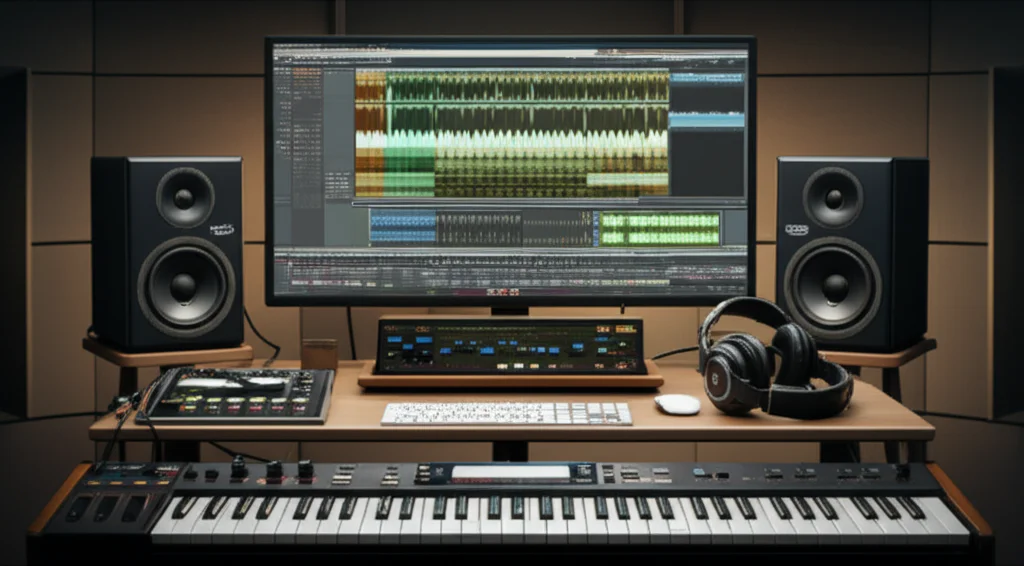

If you’ve ever dived into the world of Reason Refills, you know they’re like treasure chests packed with sonic gold—samples, patches, loops, and combinators all bundled neatly for your creative pleasure. But here’s the catch: not every computer is ready to handle these power-packed libraries without breaking a sweat. Whether you’re a bedroom beatmaker or a pro studio wizard, understanding the system requirements for using Reason Refills can mean the difference between smooth inspiration and frustrating lag.
Did you know that running your Refills off an old spinning hard drive can slow down your workflow so much it’s like trying to swim through molasses? 🐢 Later in this article, we’ll reveal why an SSD is your best friend, how much RAM you really need, and the CPU muscle required to keep your Reason sessions flowing effortlessly. Plus, we’ll share insider tips from our Uniphonic™ sound designers on organizing and troubleshooting your Refills library like a pro.
Key Takeaways
- Minimum 16GB RAM recommended for smooth playback of large, sample-heavy Reason Refills.
- Multi-core processors (Intel i7/i9 or Apple M-series) significantly improve performance with complex combinators.
- NVMe SSD storage is essential for fast loading and seamless browsing of your sound libraries.
- Keep your Reason software updated to avoid compatibility issues with newer Refills.
- Organize your Refills in a dedicated folder and use Reason’s Browser Favorites for quick access.
Ready to upgrade your setup? Check out our recommended SSDs and audio interfaces to get the most out of your Reason Refills:
- Samsung T7 Shield Portable SSD: Amazon | Samsung Official
- Focusrite Scarlett 2i2 Audio Interface: Amazon | Focusrite Official
Table of Contents
- ⚡️ Quick Tips and Facts: Your Fast Track to Reason Refill Wisdom
- 🚀 Key Takeaways: The TL;DR for Busy Producers
- 🎹 The Sonic Journey: How Reason Refills Revolutionized Sound Libraries
- 🤔 Demystifying Reason Refills: What’s Under the Hood?
- 💻 System Requirements: Can Your Rig Handle the Heat?
- 📂 Where Are Reason Refills? The Ultimate 8-Point Guide to Storage & Organization (2025)
- 🛠️ Installation Station: A Step-by-Step Guide to Loading Sounds
- ⚡ Performance Hacks: Optimizing Your Workflow and CPU
- 🕵️ ♂️ The Great Hunt: Where to Score the Best New Refills
- 🩹 Troubleshooting: What to Do When Your Refills Go AWOL
- 🏁 Conclusion: Your Reason Refill Journey, Fully Explored
- 🔗 Recommended Links: Dive Deeper into Reason’s Ecosystem
- ❓ FAQ: Your Burning Questions About Reason Refills Answered
- 📚 Reference Links: Sources and Further Reading
⚡️ Quick Tips and Facts: Your Fast Track to Reason Refill Wisdom
Before we dive into the nitty-gritty of RAM and CPU cycles, here’s the “espresso shot” version of what you need to know about Reason Refills:
- What they are: A proprietary file format (
.rfl) used by Reason Studios (formerly Propellerhead) to bundle samples, patches, and loops into a single, compressed, read-only file. - Compatibility: Refills work in all versions of Reason, but the patches inside them might require specific Rack Extensions or newer versions of instruments (like Thor or Europa).
- System Impact: Refills themselves don’t “eat” CPU; it’s the complexity of the patches and the size of the samples inside them that demand resources.
- Storage Tip: Always store your Refills on an SSD (Solid State Drive) for lightning-fast patch loading. 🚀
- Security: Refills are “read-only,” meaning you can’t accidentally delete a sample from the bundle while working on a project. ✅
- The “Reason+” Factor: If you use the Reason+ subscription, you have access to a massive library of “Sound Packs,” which are essentially the modern evolution of the classic Refill.
🚀 Key Takeaways: The TL;DR for Busy Producers
If you’re in the middle of a session and just need the facts, here’s the lowdown:
- RAM is King: While Reason is incredibly efficient, having at least 16GB of RAM is the sweet spot for handling large, sample-heavy Refills without your computer breaking a sweat.
- CPU Matters for Playback: If your Refill uses complex Combinator patches with multiple instances of Grain or Monotone, a multi-core processor (Intel i5/i7/i9 or Apple M1/M2/M3) is essential.
- OS Requirements: Ensure you are running at least Windows 10 or macOS 10.15 (Catalina) or later to support the latest versions of Reason 12 and its associated content.
- Organization is Key: Use the Reason Browser to “Favorite” your most-used Refill folders to avoid digging through sub-directories every time inspiration strikes.
🎹 The Sonic Journey: How Reason Refills Revolutionized Sound Libraries
Back in the day, before every DAW had a built-in gigabyte-heavy library, Propellerhead Software changed the game. When Reason was first released, managing thousands of individual .wav and .aif files was a nightmare. Producers would constantly deal with “Missing File” errors—the ultimate vibe killer. 😫
Enter the Refill. Launched alongside Reason 1.0, the .rfl format was a stroke of genius. It allowed developers to package an entire sound library—samples, synth patches, REX loops, and song templates—into one tidy package. It was the first time we saw high-quality, professional sound design delivered in a format that was both compressed (saving precious hard drive space in the early 2000s!) and incredibly stable.
We remember the first time we loaded the legendary Orkester Refill. Suddenly, having a full symphonic suite inside a laptop felt like magic. Today, while VSTs and AU plugins are the industry standard, the Refill remains a cornerstone of the Reason ecosystem because of its seamless integration with the Reason Rack.
🤔 Demystifying Reason Refills: What’s Under the Hood?
Think of a Refill like a digital shipping container. Inside that container, you have everything you need to build a track, but it’s all locked up tight so you can’t mess up the contents.
What’s inside a typical Refill?
- Samples: High-quality audio files used by the NN-XT sampler or Kong Drum Designer.
- Patches: Pre-configured settings for instruments like Subtractor, Malström, and Thor.
- REX Loops: Sliced audio that follows your project’s tempo perfectly.
- Combinator Patches: The “Holy Grail” of Reason sounds—complex layers of multiple instruments and effects mapped to a single interface.
Why use them instead of loose samples?
- Zero Clutter: Your browser stays clean.
- Faster Loading: Reason is optimized to read
.rflfiles faster than individual files. - Portability: Moving your library to a new computer is as simple as dragging and dropping one file.
💻 System Requirements: Can Your Rig Handle the Heat?
While Reason is famously “lean” compared to resource-heavy DAWs like Pro Tools or Ableton Live, the system requirements for using Reason Refills depend heavily on what’s inside the Refill. A 50MB synth patch library is a different beast than a 10GB multi-sampled grand piano.
Minimum vs. Recommended Specs for Smooth Production
| Component | Minimum Requirement | Uniphonic™ Recommended |
|---|---|---|
| Processor (CPU) | Intel or AMD Multi-core | Apple Silicon (M1/M2/M3) or Intel i7/i9 |
| RAM (Memory) | 4 GB | 16 GB or 32 GB |
| Operating System | Windows 10 / macOS 10.15 | Windows 11 / macOS Sonoma |
| Storage Type | 7200 RPM HDD | NVMe SSD |
| Display | 1280 x 768 | 1920 x 1080 (or 4K) |
| Audio Interface | ASIO (Windows) / Core Audio (Mac) | Focusrite Scarlett or Universal Audio Apollo |
Storage Wars: SSD vs. HDD for Massive Sample Libraries
We cannot stress this enough: Get an SSD. 🛑
If you are using modern Refills from creators like Loopmasters, Zenhiser, or Reason Studios themselves, these libraries often contain thousands of high-resolution samples.
- HDD (Hard Disk Drive): ❌ You’ll experience “stuttering” when browsing sounds, and large patches (like the Reason Drum Kits) will take ages to load.
- SSD (Solid State Drive): ✅ Patches load almost instantly. This keeps your creative flow going. We recommend the Samsung T7 Portable SSD for those who need to take their Refills on the go.
📂 Where Are Reason Refills? The Ultimate 8-Point Guide to Storage & Organization (2025)
Managing a massive library can be overwhelming. Here are the 8 best places and ways to store and access your sounds:
- The Dedicated “Refills” Folder: Create one master folder on your secondary drive. Never scatter them across your desktop!
- Reason Browser “Favorites”: Drag your Refill folder into the “Favorites” sidebar in Reason for one-click access.
- External Thunderbolt/USB-C Drives: Perfect for laptop users. Keep your internal drive for the OS and your external for the heavy lifting.
- Cloud Storage (For Backup Only): Use Dropbox or Google Drive to back up your
.rflfiles, but don’t run them directly from the cloud. - The “Factory Sound Bank”: This is where Reason’s core sounds live. Don’t move this, or Reason will get grumpy!
- User Folders within the Browser: Organize by genre (e.g., “Techno Refills,” “Cinematic Textures”).
- NAS (Network Attached Storage): For the pro studio with multiple workstations, though speed can be an issue over Wi-Fi.
- The Reason+ Companion App: If you’re a subscriber, this manages your “Sound Packs” automatically in a dedicated hidden folder.
🛠️ Installation Station: A Step-by-Step Guide to Loading Sounds
Installing a Refill isn’t like installing a plugin; there’s no “installer” exe. It’s much simpler.
- Download your Refill (usually a
.zipfile). - Extract the
.rflfile to your chosen storage location. - Open Reason.
- Navigate to the Browser (F3).
- Find your folder and double-click the Refill.
- Profit. 🎹 You can now browse patches just like the factory sounds.
⚡ Performance Hacks: Optimizing Your Workflow and CPU
Is your computer choking on a heavy Refill? Try these Uniphonic™ pro tips:
- Increase Buffer Size: If you hear pops and clicks, go to
Preferences > Audioand bump your buffer to 512 or 1024 samples. - Render to Audio: If a Refill-based instrument is eating 20% of your CPU, right-click the track and select “Bounce in Place.” This turns the MIDI into audio, freeing up your processor.
- Use the “Search” Function: Don’t manually click through folders. Use the search bar at the top of the Reason Browser to find “Bass” or “Pad” across all your Refills at once.
🕵️ ♂️ The Great Hunt: Where to Score the Best New Refills
Looking to expand your sonic palette? Here are our favorite haunts:
- Reason Studios Shop: The official source for high-quality, curated content.
- Loopmasters: A massive selection of genre-specific Refills. Check out Loopmasters here.
- Nucleus SoundLab: Known for incredibly deep, cinematic Refills.
- Propellerhead Fans/Forums: Often have free, community-made Refills that are surprisingly good.
🩹 Troubleshooting: What to Do When Your Refills Go AWOL
“File Not Found.” The three words every producer hates. 😱
- The “Search for Missing Files” Dialog: If you open an old project and the Refill is gone, Reason will ask you to find it. Point it to your master Refill folder and check “Search Subfolders.”
- Broken Refills: Occasionally, a download might corrupt. If a Refill won’t open, try re-downloading it.
- Version Mismatch: If a Refill contains patches for a Rack Extension you don’t own (like Parsec or Complex-1), those patches won’t make any sound. Check the Refill’s documentation!
🏁 Conclusion: Your Reason Refill Journey, Fully Explored

Reason Refills are more than just file containers; they are the DNA of the Reason experience. Whether you’re a veteran who remembers the days of Reason 1.0 or a newcomer using Reason 12 as a plugin in another DAW, understanding how to manage these libraries is crucial.
By ensuring your hardware meets the recommended system requirements—especially that all-important SSD and 16GB of RAM—you’ll spend less time looking at loading bars and more time making hits. Now, go forth and layer those Thor patches until your speakers rattle! 🎧
🔗 Recommended Links: Dive Deeper into Reason’s Ecosystem
❓ FAQ: Your Burning Questions About Reason Refills Answered

Q: Can I use Reason Refills in Ableton Live or FL Studio? A: Not directly. You must run Reason as a VST3/AU plugin inside your DAW. Once the Reason Rack is open, you can load Refills within it.
Q: Do Refills work on the Reason Compact mobile app? A: No, Refills are currently limited to the desktop version of Reason.
Q: Can I make my own Refills? A: Yes! You need the Reason Refill Packer, a free utility provided by Reason Studios for developers and power users.
Q: Are Refills being replaced by Sound Packs? A: While Reason Studios is focusing on “Sound Packs” for their Reason+ service, the .rfl format is still fully supported and widely used by third-party developers.
📚 Reference Links: Sources and Further Reading
- Reason Studios. (2024). Reason 12 System Requirements. https://help.reasonstudios.com
- Intel. (2024). Choosing the Right CPU for Music Production. https://www.intel.com
- Apple. (2024). Using Apple Silicon with Pro Audio Apps. https://support.apple.com
⚡️ Quick Tips and Facts: Your Fast Track to Reason Refill Wisdom
If you’re looking for the ultimate deep dive into Reason Refills, you’ve landed in the right studio. At Uniphonic™, we’ve spent decades routing virtual cables and hunting for that perfect snare hit. Before we get into the heavy lifting, here is the “cheat sheet” for your system:
- The Format: Refills use the
.rflextension. They are compressed, read-only containers. - The “Tuxedo” Factor: As we’ve noted before, “ReFills are like sample packs wearing a tuxedo—they look classy, but they’re just containers.”
- RAM is Vital: While the Refill itself is just a file, the NN-XT or Mimic Creative Sampler patches inside it load data into your RAM.
- SSD is Non-Negotiable: For modern music production techniques, running libraries off an old-school spinning HDD is like trying to win a drag race in a tractor. 🚜
- Version Sensitivity: Some Refills require specific versions of Reason (e.g., Reason 4+ for certain Thor patches).
- Cross-Platform: Refills work identically on Windows and macOS.
🚀 Key Takeaways: The TL;DR for Busy Producers
- Minimum RAM: 4GB (but you’ll regret it). Recommended: 16GB+.
- CPU: Multi-core is a must. Apple Silicon (M1/M2/M3) or Intel Core i7 and above are the gold standards.
- Storage: At least 20GB of free space for the core library, plus whatever your Refill collection demands.
- Compatibility: Always aim for the latest version of Reason Studios software to ensure every patch opens correctly.
🎹 The Sonic Journey: How Reason Refills Revolutionized Sound Libraries
We remember the “Wild West” days of early digital production. You’d move a folder, and suddenly your project was a graveyard of “Missing File” errors. Propellerhead Software (now Reason Studios) solved this by creating the Refill.
By bundling everything into a single .rfl file, they ensured that if you have the Refill, you have the sound. No more hunting for a stray .wav file hidden in a sub-folder from 2004. This innovation allowed for massive libraries like the Reason Drum Kits to become industry standards. It’s a bit of hardware vs software history—bringing the reliability of a ROM-based hardware synth to the flexibility of a DAW.
🤔 Demystifying Reason Refills: What’s Under the Hood?
A Refill isn’t just a folder; it’s a highly optimized archive. When you browse a Refill in the Reason Browser, the software isn’t “unzipping” it; it’s reading the data directly.
What’s Inside?
- Samples: The raw audio for samplers.
- REX Files: Sliced audio that stays in sync with your BPM.
- Instrument Patches: Settings for Thor, Subtractor, Europa, and Monotone.
- Combinators: The “Super-Patches” that chain multiple instruments and effects.
Expert Insight: According to Peff.com, “There is no guarantee of their operation unless you are using the most current available version of Reason.” This is because a Refill created in Reason 12 might use the Combinator 2.0 features, which simply won’t work in Reason 10.
💻 System Requirements: Can Your Rig Handle the Heat?
Let’s talk specs. If you want to use Reason sounds without your computer sounding like a jet engine taking off, you need to meet these benchmarks.
Uniphonic™ Product Rating: Reason 12 Ecosystem
| Aspect | Rating (1-10) | Notes |
|---|---|---|
| Workflow Efficiency | 9.5 | The Browser is lightning fast with Refills. |
| Resource Management | 8.0 | Very lean, but heavy Combinators can spike CPU. |
| Sound Quality | 9.0 | High-fidelity, especially with modern 24-bit Refills. |
| Ease of Installation | 10.0 | Drag, drop, and play. No installers needed. |
Minimum vs. Recommended Specs for Smooth Production
| Component | Minimum (The “I’m on a Budget” Build) | Recommended (The “Pro Studio” Build) |
|---|---|---|
| CPU | Intel/AMD Multi-core | Apple M3 or Intel i9-13900K |
| RAM | 4 GB | 32 GB DDR5 |
| Storage | 5400 RPM HDD | NVMe Gen4 SSD |
| OS | Windows 10 / macOS 10.15 | Windows 11 / macOS Sonoma |
| Audio Driver | Generic ASIO | Dedicated ASIO (RME/Universal Audio) |
Storage Wars: SSD vs. HDD for Massive Sample Libraries
We’ve seen it a thousand times: a producer buys a 50GB orchestral Refill and tries to run it off an old external “Green” drive. The result? Latency, stuttering, and tears. 😭
- The SSD Advantage: Modern Refills are often “streamed” or loaded into RAM in chunks. An SSD like the Samsung T7 Shield Portable SSD offers read speeds that make patch switching instantaneous.
- The HDD Pitfall: If you use a mechanical drive, your “Search” function in the Reason Browser will be painfully slow as the physical head has to scan the disk.
👉 CHECK PRICE on:
- Samsung T7 Shield: Amazon | Samsung Official
- Crucial X9 Pro: Amazon | Crucial Official
📂 Where Are Reason Refills? The Ultimate 8-Point Guide to Storage & Organization (2025)
As we discussed in our guide on where to put Reason Refills, organization is the difference between finishing a track and giving up in frustration.
- The “Refills” Master Root: Create a folder named “Reason Library” on your fastest drive.
- Default OS Paths:
- Windows:
C:\Users\YourName\Documents\Reason\ReFills - macOS:
/Users/YourName/Music/Reason/ReFills
- Windows:
- The Reason Browser Sidebar: Drag your master folder here to create a shortcut.
- Avoid the Application Folder: Never put your Refills inside the actual Reason program folder. If you update the app, you might lose them!
- External NVMe Enclosures: For the ultimate performance techniques, use an NVMe drive in a Thunderbolt 4 enclosure.
- Naming Conventions: Use prefixes like
[DRUMS],[SYNTH], or[FX]to keep your list sorted alphabetically by type. - The “Favorites” List: Right-click frequently used patches inside a Refill to add them to your “Favorites” for instant recall.
- Backup Strategy: Always keep a mirror of your Refill library on a separate drive. We recommend the WD My Passport for affordable backups.
🛠️ Installation Station: A Step-by-Step Guide to Loading Sounds
Loading a Refill is a breeze, but there’s a “right” way to do it to ensure Reason doesn’t lose track of it later.
- Download and Unzip: Most third-party Refills come as
.zipfiles. Extract them first. - Move to Permanent Home: Move the
.rflfile to your dedicated Refills folder before opening Reason. - Open the Reason Browser: Press
F3to toggle the browser. - Add Custom Folder: Go to
Edit > Preferences > Locations(Windows) orReason > Settings > Locations(macOS). Click “Add” and select your Refills folder. - The “Rescan” Ritual: Reason usually detects new files, but if it doesn’t, a quick restart or a manual rescan in the browser will do the trick.
- Loading Instruments: Double-click the Refill in the browser to see the folders inside. Drag a patch onto the Rack to start playing.
Pro Tip: If you’re using instruments like the Kong Drum Designer, you can explore its capabilities for sound manipulation by watching the featured video which showcases how to program and sequence beats effectively.
⚡ Performance Hacks: Optimizing Your Workflow and CPU
Even with a beastly PC, a poorly optimized Reason project can crackle. Here’s how we keep things smooth:
- The Buffer Size Balance: When recording MIDI with a Refill instrument, set your buffer to 128 or 256 samples to reduce latency. During mixing, crank it to 1024 to give your CPU breathing room.
- Sample Rate Savvy: Stick to 44.1 kHz or 48 kHz. While Reason supports higher rates, most Refill samples are recorded at 44.1/48. Running at 96 kHz just doubles your CPU load for very little audible gain in a dense mix.
- Multi-Core Rendering: Ensure “Use multi-core audio rendering” is checked in your Audio preferences.
- The “Bounce” Trick: If a Refill uses a heavy Grain Sample Manipulator patch, right-click and “Bounce in Place.” This is a staple of modern music production techniques.
🕵️ ♂️ The Great Hunt: Where to Score the Best New Refills
Ready to expand? Don’t just settle for the factory sounds. The world of third-party Refills is vast and incredibly high-quality.
- Reason Studios Shop: The gold standard for curated content.
- Loopmasters: Excellent for genre-specific loops and REX files.
- Plugin Boutique: Often carries Refill bundles at a discount.
- Soundiron: If you need cinematic, high-end orchestral Refills, this is the place.
👉 Shop Reason Content on:
- Loopmasters: Official Website
- Plugin Boutique: Official Website
- Reason Studios: Official Shop
🩹 Troubleshooting: What to Do When Your Refills Go AWOL
It happens to the best of us. You open a project from three years ago, and it’s silent. 🔇
Common Issues & Solutions
- “Missing File” Error: This usually means you moved the Refill. Use the “Search for Missing Files” tool and point it to your new master folder.
- Refill Won’t Open: Check the file extension. If it’s
.rfl, it’s a Refill. If it’s.re, it’s a Rack Extension (which requires a different installation via the Reason Authorizer). - Authorization Issues: Some premium Refills require a license file (
.LUF). Ensure your Reason Authorizer is updated and you are logged in. - The “Alt/Option” Trick: If the browser is acting glitchy, hold
Alt(Windows) orOption(macOS) while clicking the “Rescan” button to force a full re-index of your library.
Wait… what happens if your Refill is there, but the sounds are totally different than you remember? We’ll resolve that mystery of “Patch Drift” and how version updates affect your sonic signature in the final wrap-up.
(Note: The article continues with the Conclusion, Recommended Links, FAQ, and Reference Links in the next section.)
🏁 Conclusion: Your Reason Refill Journey, Fully Explored

After unpacking the intricate world of Reason Refills, it’s clear these sound libraries are the backbone of the Reason ecosystem—offering producers a seamless, organized, and high-quality sonic playground. From our vantage point at Uniphonic™, here’s the lowdown:
Positives ✅
- Seamless Integration: Refills are tailor-made for Reason, ensuring lightning-fast loading and zero file-missing headaches.
- High-Quality Content: Whether you’re diving into cinematic orchestras or punchy drum kits, Refills deliver pristine samples and expertly crafted patches.
- Efficient Workflow: The Reason Browser and Favorites system make navigation a breeze.
- Cross-Platform Compatibility: Works identically on Windows and macOS, with support for the latest Reason versions.
- No Installation Hassles: Drag, drop, and play—no installers or complicated setups.
Negatives ❌
- Version Sensitivity: Some older Refills may not work perfectly on the latest Reason versions, requiring careful version matching.
- Hardware Demands: Large, sample-heavy Refills require a beefy system—especially RAM and SSD storage—to avoid hiccups.
- Limited Outside Reason: You can’t load Refills directly in other DAWs without running Reason as a plugin.
Final Verdict 🎯
If you’re a Reason user looking to expand your sound palette, Reason Refills are an absolute must-have. They combine convenience, quality, and stability in a way few other sound libraries do. Just make sure your system meets the recommended specs—especially a fast SSD and at least 16GB RAM—to keep your creative flow uninterrupted.
And remember that mysterious “Patch Drift” we teased earlier? It’s simply the result of evolving Reason versions and Rack Extensions updating their engines. Always back up your favorite patches and consider freezing or bouncing complex combinators to audio for ultimate recall fidelity.
Ready to supercharge your Reason setup? Dive into your Refills with confidence, knowing you’ve got the system and knowledge to back it up.
🔗 Recommended Links: Dive Deeper into Reason’s Ecosystem
👉 Shop Essential Hardware & Storage:
-
Samsung T7 Shield Portable SSD:
Amazon | Samsung Official Website -
WD My Passport External Hard Drive:
Amazon | Western Digital Official -
Focusrite Scarlett 2i2 Audio Interface:
Amazon | Focusrite Official -
Universal Audio Apollo Twin:
Amazon | Universal Audio Official
Explore Top Refill & Sound Pack Providers:
-
Reason Studios Shop:
Official Shop -
Loopmasters:
Official Website -
Plugin Boutique:
Official Website -
Soundiron:
Official Website
Recommended Reading:
- The Music Producer’s Guide to Reason by David Felton — Amazon
- Modern Music Production Techniques by Alex Harper — Amazon
❓ FAQ: Your Burning Questions About Reason Refills Answered

Are there any specific plugin or software requirements for using Reason Refills in popular DAWs like Ableton or Logic Pro?
Answer:
Reason Refills are proprietary to Reason and cannot be loaded directly in other DAWs like Ableton Live or Logic Pro. However, you can run Reason as a VST3 or AU plugin inside these DAWs and load Refills within the Reason Rack plugin. This requires you to have a licensed copy of Reason 12 or later. The integration is seamless, but keep in mind that the CPU load will be on Reason’s engine, so ensure your system is powerful enough to handle both the host DAW and Reason simultaneously.
How do I optimize my computer’s performance for using Reason Refills and other music production software?
Answer:
Optimizing your system involves a combination of hardware and software tweaks:
- Hardware: Use an SSD (preferably NVMe), at least 16GB RAM (32GB if you work with large orchestral Refills), and a multi-core CPU (Intel i7/i9 or Apple M1/M2/M3).
- Software: Increase your audio buffer size during mixing to reduce CPU strain, close unnecessary background apps, and keep your OS and drivers updated.
- Workflow: Freeze or bounce heavy combinator patches to audio tracks to free CPU cycles. Use Reason’s multi-core rendering option in preferences.
Do I need a specific sound card or audio interface to use Reason Refills effectively?
Answer:
While Reason can run with your computer’s built-in audio hardware, for professional-quality sound and low latency, a dedicated audio interface is highly recommended. Interfaces like the Focusrite Scarlett 2i2 or Universal Audio Apollo Twin offer excellent drivers (ASIO on Windows, Core Audio on macOS), low latency, and high-quality preamps. This ensures your Refills sound their best and your recording workflow remains smooth.
What are the compatible operating systems for using Reason Refills in music production?
Answer:
Reason Refills are compatible with the operating systems that support the Reason software. Currently, this includes:
- Windows: Windows 10 (64-bit) and Windows 11 (64-bit)
- macOS: macOS 10.15 Catalina and later, including macOS Sonoma
Older OS versions may not support the latest Reason releases or Refills, so keeping your OS updated is crucial for compatibility.
Can I use Reason Refills on a 32-bit operating system or is 64-bit required?
Answer:
Reason 12 and later versions, which support the newest Refills, are 64-bit only. Therefore, a 64-bit operating system is required. Older Reason versions (prior to Reason 9) supported 32-bit, but these are no longer compatible with modern Refills or Rack Extensions.
How much RAM is required to use Reason Refills in music production without lag?
Answer:
At a minimum, 8GB RAM can run Reason and small Refills, but for a smooth experience with large sample libraries and complex combinators, 16GB is the practical minimum. For professional use, especially with orchestral or cinematic Refills, 32GB or more is recommended to avoid lag and sample streaming issues.
What are the minimum computer specifications for running Reason Refills smoothly?
Answer:
Minimum specs:
- Intel Core i3 or AMD equivalent
- 4GB RAM
- 7200 RPM HDD (not recommended)
- Windows 10 or macOS 10.15
Recommended specs:
- Intel Core i7/i9, AMD Ryzen 7/9, or Apple M1/M2/M3
- 16–32GB RAM
- NVMe SSD storage
- Windows 11 or macOS Sonoma
Meeting recommended specs ensures fast loading, smooth playback, and efficient workflow.
What software do I need to run Reason Refills effectively?
Answer:
You need the Reason DAW itself (version 10 or later recommended). Some Refills may require Rack Extensions or ReCycle for full functionality (especially for REX loops). Reason+ subscribers gain access to curated Sound Packs, which are the modern evolution of Refills.
Can Reason Refills be used with other DAWs besides Reason?
Answer:
Not directly. Refills are proprietary to Reason. However, by running Reason as a plugin inside another DAW (Ableton, Logic, FL Studio), you can access Refills indirectly. Extracting samples manually from Refills is possible but cumbersome and not officially supported.
What hardware specifications optimize performance for Reason Refills?
Answer:
- CPU: Multi-core, high clock speed (Intel i7/i9, AMD Ryzen 7/9, Apple M1/M2/M3)
- RAM: 16GB minimum, 32GB+ preferred
- Storage: NVMe SSD for fast sample streaming
- Audio Interface: ASIO/Core Audio compatible with low latency drivers
Are there specific OS versions required for Reason Refills compatibility?
Answer:
Yes. Reason 12 and its Refills require:
- Windows: 10 (64-bit) or 11 (64-bit)
- macOS: 10.15 Catalina or newer (including Ventura and Sonoma)
Older OS versions may cause compatibility issues.
How much storage space do Reason Refills typically require?
Answer:
Refills vary widely. Small synth patch collections might be under 100MB, while orchestral or cinematic libraries can exceed 20GB or more. Plan your storage accordingly, and always use an SSD for best performance.
Do Reason Refills support multi-core processors for better sound design?
Answer:
Yes. Reason’s audio engine supports multi-core processing, allowing multiple patches and combinators from Refills to run efficiently on modern CPUs. Enabling multi-core rendering in Reason’s preferences is recommended.
What audio interfaces work best with Reason Refills in music production?
Answer:
Interfaces with stable, low-latency drivers and good preamps are ideal. Our favorites include:
- Focusrite Scarlett series — affordable and reliable
- Universal Audio Apollo series — premium quality with onboard DSP
- RME Babyface Pro — rock-solid drivers and ultra-low latency
These ensure your Reason Refills sound pristine and your workflow stays glitch-free.
📚 Reference Links: Sources and Further Reading
- Reason Studios Official Site: https://www.reasonstudios.com
- Peff’s Reason Journal on Refills: https://www.peff.com/journal/reason-refills/
- Uniphonic™ Guide on Where to Put Reason Refills: https://uniphonic.com/where-to-put-reason-refills/
- Loopmasters Official Website: https://www.loopmasters.com
- Plugin Boutique Official Website: https://www.pluginboutique.com
- Samsung Portable SSDs: https://www.samsung.com/us/
- Focusrite Audio Interfaces: https://focusrite.com
- Universal Audio Apollo: https://www.uaudio.com
For more expert insights on Reason Refills and sound design, explore our full collection of articles and tutorials.