
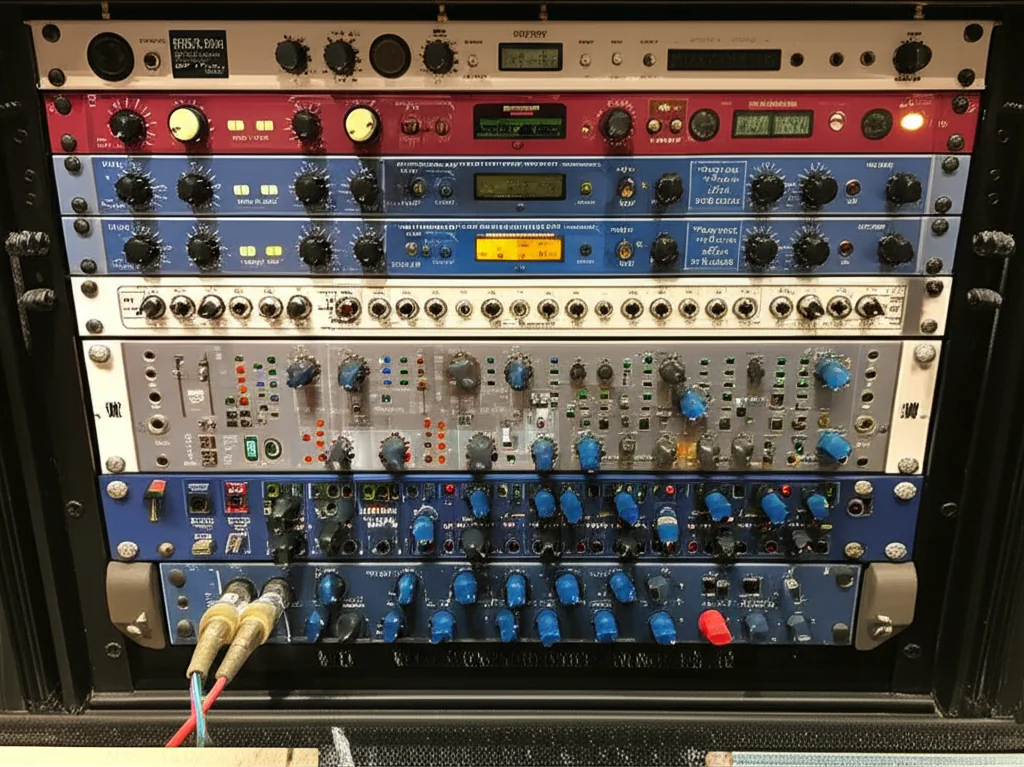

The secret to radio-ready vocals isn’t a single magic plugin, but a strategic chain combining surgical correction, dynamic control, and creative saturation. Whether you’re polishing a demo or mixing a chart-toper, the right vocal processing plugins can transform a raw take into a polished performance instantly.
We once spent three hours trying to fix a “boxy” vocal track with EQ alone, only to realize a simple 2dB cut in the 30Hz range and a touch of tape saturation solved it in seconds. That’s the power of knowing your tools. Did you know that the human ear is most sensitive to frequencies between 2kHz and 5kHz, which is exactly where vocal presence lives—and where harshness often hides?
Key Takeaways
- Order is Critical: Always process vocals in a specific signal flow: Correction → Subtractive EQ → Compression → Additive EQ → Effects.
- Saturation is Secret Sauce: Use plugins like Soundtoys Decapitator to add harmonic richness and help vocals cut through dense mixes without just turning up the volume.
- Parallel Processing Wins: Blend crushed, heavily compressed signals with your dry vocal to add power and character without sacrificing natural dynamics.
- Automation is Non-Negotiable: Even the best plugins can’t replace manual volume riding to ensure every lyric sits perfectly in the mix.
👉 Shop Top Vocal Tools:
- All-in-One Suites: iZotope Nectar 3 | Antares Auto-Tune
- Surgical EQ & Dynamics: FabFilter Pro-Q 3 | FabFilter Pro-DS
- Creative Effects: Soundtoys Bundle | Valhalla DSP VintageVerb
Table of Contents
- ⚡️ Quick Tips and Facts
- 🎙️ The Evolution of Vocal Processing: From Tape to Algorithms
- 🧠 Understanding the Vocal Chain: Signal Flow Essentials
- 🎚️ Top 15 Must-Have Vocal Processing Plugins for 2024
- 1. iZotope Nectar 3: The All-in-One Vocal Suite
- 2. FabFilter Pro-Q 3: Surgical EQ Precision
- 3. FabFilter Pro-DS: Taming Sibilance Without the Sizzle
- 4. Soundtoys Decapitator: Analog Saturation and Grit
- 5. Soundtoys EchoBoy: Creative Delay and Space
- 6. Antares Auto-Tune: The Pitch Correction Standard
- 7. Celemony Melodyne: Note-by-Note Manipulation
- 8. Oeksound Sothe2: Resonance Supression Magic
- 9. Valhalla DSP VintageVerb: Classic Reverb Tones
- 10. Slate Digital Virtual Mix Rack: Modular Flexibility
- 1. Soundtoys Little Alterboy: Formant Shifting and Effects
- 12. Overloud Dopamine: Dynamic Vocal Shaping
- 13. Vochlea Dubler 2: Voice-to-MIDI Control
- 14. Universal Audio 176 and LA-2A Emulations: The Classic Compressor Duo
- 15. Waves CLA-76 and CLA-2A: Budget-Friendly Classics
- 🛠️ Advanced Techniques: Layering, Stacking, and Parallel Processing
- 🎛️ EQ Mistakes Every Beginner Makes (+ How to Avoid Them)
- 🔊 Mix Tip: The Art of Subtractive EQ for Vocals
- 🔊 Mix Tip: When to Use Serial vs. Parallel Compression
- 🔊 Mix Tip: De-essing Strategies for Harsh Highs
- 🔊 Mix Tip: Adding Depth with Delay Throws
- 🔊 Mix Tip: Saturation for Presence and Clarity
- 🔊 Mix Tip: Managing Low-Mid Mud in Dense Mixes
- 🔊 Mix Tip: Automating Vocal Levels for Consistency
- 🔊 Mix Tip: Using Reverb Pre-Delays to Maintain Intelligibility
- 🔊 Mix Tip: Formant Shifting for Character and Texture
- 🔊 Mix Tip: Creative Pitch Correction Styles
- 🔊 Mix Tip: The “Telephone” Effect with Bandpass Filters
- 🔊 Mix Tip: Sidechaining Vocals to the Kick and Bass
- 🔊 Mix Tip: Using Multiband Compression on Problematic Frequencies
- 🔊 Mix Tip: Creating a “Double” with Micro-Pitch Detuning
- 🔊 Mix Tip: Cleaning Up Breath Noise Without Robing Life
- 🔊 Mix Tip: Final Polish with Limiters and Maximizers
- 🆓 New FREE Guide for Musicians and Producers: Vocal Mastery Checklist
- 🎓 Unlock 3 Days of FREE Pro-Level Training
- 🎁 Get 2 Weeks FREE! Trial Offers for Top Plugins
- 🏁 Conclusion
- 🔗 Recommended Links
- 📚 Reference Links
Body
Alright, let’s pull back the curtain. You’ve tracked a killer vocal performance
, but getting it to sit perfectly in the mix feels like trying to solve a Rubik’s Cube in the dark. We
‘ve all been there. Here at Uniphonic™, our control rooms have seen (and heard) it all. We’
re about to spill the beans on the secret sauce: vocal processing plugins. This isn’t just a list; it’s a
deep dive into the tools and techniques that separate a decent demo from a radio-ready hit. We’ll cover everything from foundational
concepts to the exact plugins the pros use, and even some of our favorite happy accidents.
Ready to make your vocals shine
? Let’s get into it.
⚡
️ Quick Tips and Facts
Before we plug anything in, let’s get our bearings with some rapid-fire wisdom
.
-
The Human Ear is Picky: The human ear is most sensitive to frequencies between 2 kHz
and 5 kHz, which is where vocal clarity and presence live. This is also where harshness can easily build up. -
Order of Operations Matters… A Lot: The sequence of your plugins (your “vocal chain”)
dramatically changes the sound. A compressor before an EQ will react
differently than one placed after. The standard, can’t-go-wrong order is: Correction
(Pitch/Noise) -> Subtractive EQ -> Compression -> Additive EQ -> Effects (Reverb, Delay, etc.).
Less is More (Usually):** A common beginner mistake is over-processing. A 2-4 dB cut in
a muddy frequency area can often do more for clarity than a massive boost elsewhere.
Parallel Processing is Your Friend:** Blending a heavily processed signal with the original dry signal is a pro-level technique for adding
power and character without sacrificing natural dynamics.
- “Mud
” Lives Here: That boxy, congested sound in a vocal? It’s usually lurking in the 200-
500 Hz range. A gentle cut
here can work wonders. - Automation is Expression: Don’t just set and forget your plugins. Autom
ating parameters like reverb sends, delay feedback, or EQ boosts can make a vocal performance feel alive and dynamic.
<
a name=”-the-evolution-of-vocal-processing-from-tape-to-algorithms”>🎙
️ The Evolution of Vocal Processing: From Tape to Algorithms
Ever wonder how those classic Motown or Beatles vocals got their
sound without a single plugin? It was all about the hardware, baby! Engineers were artists, using the physical limitations of their
gear to create character.
- Tape Saturation: Simply driving the input of an analog tape machine hard would naturally
compress and add pleasing harmonic distortion, giving vocals warmth and presence. - Plate Reverbs: Massive, vibrating
metal plates housed in dedicated rooms created the lush, diffuse reverb heard on countless records. - Tube Compressors: Units
like the Teletronix LA-2A used optical circuits and vacuum tubes to gently level out vocal dynamics in a way that was
incredibly musical.
Today, we have plugins that emulate this classic gear with stunning accuracy, plus tools that offer surgical precision those
early pioneers could only dream of. The goal remains the same: to enhance the emotion of the performance. We’re
just lucky enough to have an entire studio’s worth of gear inside our laptops. This is a topic we explore more
in our Hardware vs Software category
.
🧠 Understanding the Vocal Chain: Signal Flow Essentials
Think of your vocal chain as an assembly line. Each stage prepares the vocal
for the next, and the order is crucial for a professional result. Getting this wrong is like putting your socks on over your shoes; it just doesn’t
work.
Here’s the Uniphonic™ standard starting point for 90% of vocal mixes:
Cleanup & Correction: This is where you address technical issues first.
- Noise Gate/Reduction
: If there’s background noise or headphone bleed, clean it up here. - Pitch Correction (Subtle!): Use something like Antares Auto-Tune or Celemony Melodyne to gently nudge notes into
place. Do this first so subsequent plugins aren’t reacting to off-key notes.
- Subtractive EQ
: Before you boost anything, cut the bad stuff.
High-Pass Filter (HPF): Roll off inaudible low-end rumble below 80-10
0Hz. This cleans up mud and creates space for the bass and kick.
- Cut Problem Frequencies: Sweep for and gently notch out any muddy (200-500Hz), boxy (~600Hz), or harsh (2-4kHz) frequencies.
- Dynamic Control (Compression): Now that the signal is clean, it
‘s time to control the volume.
- Compress
or: This evens out the difference between the loudest and quietest parts of the vocal, making it sit consistently in the mix.
A ratio of 2:1 to 4:1 is a great starting point.
- Tonal Shaping & Character: With dynamics handled, you can add color.
- De-Ess
er: Compression can exaggerate harsh “s” and “t” sounds (sibilance). A de
-esser targets and reduces just these frequencies. - Additive EQ: Now you can boost frequencies to add
presence (5-8kHz) and “air” (10-15kHz) for that expensive-sounding sheen. - Saturation: This is the secret weapon! Sat
uration adds harmonics that make a vocal feel warmer, richer, and more present without just turning up the volume. It’s a key part of many Music Production Techniques.
- Time-Based Effects (Sends): These create space and depth.
- Reverb & Delay: Crucially, these should almost always be on separate auxiliary tracks (sends/busses), not directly on the vocal track. This gives you independent control over the effect level and keeps your
main vocal clean and upfront.
This order ensures that each plugin is working with
the best possible signal from the one before it.
<a name=”-top-
15-must-have-vocal-processing-plugins-for-2024″>🎚️
Top 15 Must-Have Vocal Processing Plugins for 2024
Okay, the moment you’ve
been waiting for. We’ve argued, we’ve tested, and we’ve mixed countless tracks to assemble the
definitive Uniphonic™ list of essential vocal plugins. These are the workhorses and secret weapons you’ll find in our sessions
every single day.
<a name=”1-izotope-nectar-3-the-all-in-one
-vocal-suite”>1. iZotope Nectar 3: The All-in-One Vocal Suite
| Criteria | Rating (1-10) |
|---|---|
| ** | |
| Design** | 9 |
| Functionality | 10 |
| Ease of Use | 8 |
| Sonic Quality | 9 |
| Overall | 9 |
Nectar 3 is
like a Swiss Army knife for vocals. It’s a complete channel strip with modules for everything: EQ, compression, de
-essing, pitch correction, reverb, and more. The “Vocal Assistant” feature is genuinely useful, listening to your track and
creating a custom preset as a starting point.
Why We Love It:
It’s an incredible tool for quickly
getting a professional sound. The visual feedback is second to none, and the integration with other iZotope products like Relay and Ozone
is a workflow dream. The dynamic EQ and follow-EQ modes are particularly powerful for taming resonances that move around with
the singer’s melody.
Potential Drawbacks:
The sheer number of options can be overwhelming for absolute beginners. It
‘s also a bit CPU-heavy, so you might not want to run 20 instances in a huge session
.
👉 CHECK PRICE on:
- iZotope Nectar 3: Sweetwater | Plugin Boutique | iZotope Official Website
<a name=”2-fabfilter-pro-q-3-surgical-eq
-precision”>2. FabFilter Pro-Q 3: Surgical EQ Precision
| Criteria | Rating (1-10) |
|---|---|
| Design | 10 |
| Functionality | 10 |
| Ease of Use | 10 |
| Sonic Quality | 10 |
| Overall | 10 |
If you could
only have one EQ plugin for the rest of your life, this would be it. Pro-Q 3 is the gold
standard for a reason. Its interface is incredibly intuitive, the spectrum analyzer is a lifesaver, and the sound is
pristine.
Why We Love It:
The dynamic EQ functionality is a game-changer for vocals. Got a harsh frequency that only pops out on loud notes? Make it a dynamic band that only cuts when needed. Need
to clear space for the vocal in a guitar track? Use the EQ Match feature to see where frequencies are clashing.
It’s simply the best surgical tool on the market.
Potential Drawbacks:
Honestly, it’s hard to
find any. Some might argue it lacks analog “character,” but that’s not its purpose. It’s designed
for transparent, precise control.
👉 CHECK PRICE on:
- FabFilter Pro-Q 3:
Sweetwater | Plugin Boutique | FabFilter Official Website
<a name=”3-fabfilter-pro-ds-taming-sibilance-without-the
-sizzle”>3. FabFilter Pro-DS: Taming Sibilance Without the Sizzle
|
| Criteria | Rating (1-10) |
|---|---|
| Design | 10 |
| Functionality | 9 |
| Ease of Use | |
| 10 | |
| Sonic Quality | 10 |
| Overall | 10 |
A sibling to Pro-Q 3, the Pro-DS brings the same intelligent design to one of the trickiest vocal problems
: sibilance. Its “Single Vocal” detection algorithm is scarily accurate at identifying harsh “s” sounds and
attenuating them transparently.
Why We Love It:
It just works, and it works without making the vocal sound lispy or unnatural, a common problem with lesser de-essers
. The real-time display shows you exactly what it’s doing, taking the guesswork out of the process. The look-ahead feature and linear-phase processing ensure maximum transparency.
Potential Drawbacks:
It’s a dedicated tool, so
it doesn’t have the bells and whistles of a full channel strip. But for de-essing, it’s unparalleled
.
👉 CHECK PRICE on:
- FabFilter Pro-DS: Sweetwater | Plugin Boutique | FabFilter Official Website
<a name=”4-soundtoys-de
capitator-analog-saturation-and-grit”>4. Soundtoys Decapitator: Analog Saturation
and Grit
| Criteria | Rating (1-10) |
|---|---|
| : | |
| Design | 9 |
| Functionality | 9 |
| ** | |
| Ease of Use** | 10 |
| Sonic Quality | 10 |
| Overall | |
| 9.5 |
When a vocal is clean but just feels… boring, Decapitator is the answer. This
plugin models five different types of analog saturation, from smooth tube warmth to aggressive, solid-state distortion. For adding harmonic
richness and helping a vocal cut through a dense mix, it’s our go-to.
Why We Love It:
It’s simple, effective, and sounds incredible. The “Punish” button is legendary for a reason, but the
real magic is in the subtle settings. Just a touch of the “A” (Ampex) or “E” (EMI) style saturation can bring a vocal to life. The mix knob allows for easy parallel processing. It’s a must
-have in our Plugin Recommendations.
Potential Draw
backs:
It can be easy to overdo it. A little goes a long way!
👉 CHECK PRICE on:
*
Soundtoys Decapitator: Sweetwater | Plugin Boutique | Soundtoys Official Website
<a name=”
5-soundtoys-echoboy-creative-delay-and-space”>5. Soundtoys EchoBoy: Creative
Delay and Space
| Criteria | Rating (1-10) |
|---|---|
| :— | :— |
| Design | 9 |
| Functionality | 10 |
| Ease of Use | 8 |
| Sonic Quality | 10 |
| **
Overall** | 9.5 |
EchoBoy is more than a delay; it’s a history of echo
devices in one plugin. It models everything from classic tape delays like the Echoplex to oil can units and digital delays
.
Why We Love It:
The versatility is insane. You can create a simple slapback delay, a rhythmic
dotted-eighth note echo, or a washed-out, modulated space that’s almost a reverb. The “Style” editor
lets you dial in the specific character of the delay, adding saturation, wobble, and diffusion. It’s perfect for creating ”
delay throws”—automating the send to catch just the last word of a phrase for dramatic effect.
Potential Drawbacks:
The sheer number of options can be a bit much at first glance. It pays to spend time with the presets to
understand its full potential.
👉 CHECK PRICE on:
- Soundtoys EchoBoy: Sweetwater | Plugin Boutique | Soundtoys Official Website
6. Antares Auto-Tune: The Pitch Correction Standard
| Criteria | Rating (1-10) |
|---|---|
| Design | 8 |
| Functionality | 10 |
| Ease of Use | 7 |
| Sonic Quality | |
| 9 | |
| Overall | 8.5 |
Ah, Auto-Tune. It’s the plugin
everyone loves to hate, but nearly every pro uses it. Whether you’re going for the transparent, “you can’t even
tell it’s on” correction or the hard-tuned T-Pain effect, Auto-Tune is the industry standard.
**
Why We Love It:**
For real-time, low-latency pitch correction, it’s unbeatable. It’s perfect
for tracking, allowing singers to hear themselves perfectly in tune, which often leads to better Performance Techniques. The “Flex-Tune” and “Humanize” controls are key to achieving a natural
sound.
Potential Drawbacks:
For detailed, note-by-note surgical editing, it’s less
flexible than its main competitor…
👉 CHECK PRICE on:
- Antares Auto-Tune: Sweetwater |
Plugin Boutique | Antares Official Website
7. Ce
lemony Melodyne: Note-by-Note Manipulation
| Criteria | Rating (1-10) |
|---|---|
| Design | 9 |
| **Function | |
| ality** | 10 |
| Ease of Use | 8 |
| Sonic Quality | |
| 10 | |
| Overall | 9.5 |
Where Auto-Tune is a real-time
tool, Melodyne is a deep-editing powerhouse. It analyzes your audio and displays it as “blobs” on a piano
roll, allowing you to edit the pitch, timing, vibrato, and even the volume of individual notes within a performance
.
Why We Love It:
The level of control is simply astonishing. You can fix a single flat note in
a chord, tighten up the timing of a phrase, or even rewrite a melody entirely. The DNA
(Direct Note Access) technology can even work on polyphonic material. For transparent, surgical pitch and time editing, nothing
else comes close.
Potential Drawbacks:
It’s not a real-time plugin; it requires you
to “transfer” the audio into it first. The workflow can be a bit slower, but the results are worth it
.
👉 CHECK PRICE on:
- Celemony Melodyne: Sweetwater | Plugin Boutique |
Celemony Official Website
8
. Oeksound Soothe2: Resonance Suppression Magic
| Criteria | Rating (1-10) |
|---|---|
| Design | 9 |
| **Functionality | |
| ** | 10 |
| Ease of Use | 9 |
| Sonic Quality | |
| 10 | |
| Overall | 9.5 |
Soothe2 is a “dynamic resonance
suppressor.” What does that mean? It listens to your audio, identifies harsh or unpleasant resonant frequencies in real-time,
and automatically turns them down. It’s like having a thousand tiny, automated EQ bands working to smooth out your vocal
.
Why We Love It:
It’s pure magic for tackling harshness that a static EQ can’
t fix. It’s brilliant at taming overly bright condenser mics, reducing room resonances in less-than-ideal
recording spaces, and smoothing out the upper-mids without making the vocal sound dull.
Potential Drawbacks:
Like
Decapitator, it’s easy to overdo it and suck the life out of a track. Use the delta
button to hear what it’s removing and dial it in carefully.
👉 CHECK PRICE on:
- O
eksound Soothe2: Plugin Boutique | oeksound Official Website
<a name=”9-valhalla-
dsp-vintageverb-classic-reverb-tones”>9. Valhalla DSP VintageVerb: Classic Reverb T
ones
| Criteria | Rating (1-10) |
|---|---|
| Design | 8 |
| Functionality | 9 |
| **Ease | |
| of Use** | 10 |
| Sonic Quality | 10 |
| Overall | |
| 9.5 |
Valhalla DSP has a reputation for making incredible-sounding plugins at an unbeatable price point
, and VintageVerb is a prime example. It models classic digital hardware reverbs from the 70s, 80
s, and today.
Why We
Love It:
The sound. It’s just lush, rich, and sits beautifully in a mix. The algorithms for Plate, Hall, and Chamber are all stunning on vocals. The interface is simple and encourages tweaking, and the “Color” modes let you dial
in everything from dark and gritty to modern and clean. For the price, it’s arguably the
best value in the entire plugin world.
Potential Drawbacks:
It doesn’t have the hyper-realistic
room modeling of some more expensive convolution reverbs, but for characterful, musical reverb, it’s a winner.
CHECK
PRICE on:
- Valhalla DSP VintageVerb: Valhalla DSP Official Website
<a name=”10-slate
-digital-virtual-mix-rack-modular-flexibility”>10. Slate Digital Virtual Mix Rack: Modular Flexibility
| Criteria | Rating (1-10) |
|---|
| Design | 9 |
| Functionality | 10 |
| Ease
of Use | 8 |
| Sonic Quality | 9 |
| Overall | 9 |
Virtual Mix Rack (VMR) is a 500-series style rack that lets you build custom channel
strips by mixing and matching dozens of Slate’s excellent analog-modeling plugins.
Why We Love It:
The
flexibility is amazing. You can combine an SSL-style EQ with a Neve-style preamp and a Fairchild-style compressor all
in one window. The component-level modeling is top-notch, capturing the non-linearities that make analog gear sound so
good. The All-Access Pass subscription is an incredible value for getting hundreds of pro-quality plugins.
Potential Drawbacks:
The subscription model isn’t for everyone. Some of the individual modules can be a bit subtle, requiring a trained
ear to appreciate fully.
👉 CHECK PRICE on:
- Slate Digital Virtual Mix Rack: [Sweetwater](https://
www.sweetwater.com/store/search.php?s=Slate+Digital+Virtual+Mix+Rack
) | Slate Digital Official Website
<
a name=”1-soundtoys-little-alterboy-formant-shifting-and-effects”>1
- Soundtoys Little AlterBoy: Formant Shifting and Effects
| Criteria | Rating (1-10) |
|---|---|
| Design | 10 |
| Functionality | |
| 9 | |
| Ease of Use | 10 |
| Sonic Quality | |
| 9 | |
| Overall | 9.5 |
This little plugin packs a huge creative punch. At
its core, it’s a pitch and formant shifter. Formant shifting changes the tonal character of a voice without changing the
pitch, effectively altering the perceived size of the singer’s vocal tract.
Why We Love It:
It’s instant fun and incredibly useful. Lower the formants for a deep
, masculine tone, or raise them for a thinner, more feminine or childlike sound.
It’s perfect for creating harmonies and doubles that sound distinct from the lead vocal. The built-in tube saturation and robot modes are just icing on the cake.
Potential Drawbacks:
It’s a character piece, not a transparent pitch correction tool. Use it for effect, not for invisible tuning.
CHECK
PRICE on:
- Soundtoys Little AlterBoy: Sweetwater | [Plugin Boutique](https
://www.pluginboutique.com/product/2-Effects/54-Vocal-Processing/1
563-Little-AlterBoy) | Soundtoys Official Website
<a name=”12-overloud-dopamine-dynamic-vocal-
shaping”>12. Overloud Dopamine: Dynamic Vocal Shaping
| Criteria | Rating (1-10) |
|---|---|
| Design | 8 |
| ** | |
| Functionality** | 8 |
| Ease of Use | 9 |
| Sonic Quality | |
| 9 | |
| Overall | 8.5 |
Dopamine is a recreation of a classic studio
trick: using vintage tape noise-reduction units (like the Dolby A-361) as enhancers. Instead of synthesizing new harmonics like a traditional exciter, it dynamically re
-balances the existing harmonics in the signal.
Why We Love It
:
It adds a beautiful, silky presence and “air” to vocals that’s difficult to achieve with EQ alone. It can make a vocal cut through a mix without sounding harsh or artificial. The “Noise
Stressor” setting is specifically tailored for vocals and can add a lovely in-your-face quality.
Potential Drawbacks:
It’s a one-trick pony, but it’s a very
, very good trick. The effect is subtle, so it’s best used as a final
polish rather than a primary shaping tool.
👉 CHECK PRICE on:
Overloud Dopamine:** Plugin Boutique | Overloud Official Website
<a name=”13-vochlea-dubler
-2-voice-to-midi-control”>13. Vochlea Dubler 2: Voice
-to-MIDI Control
| Criteria | Rating (1-10) |
|---|---|
| :— | :— |
| Design | 9 |
| Functionality | 10 |
| Ease of Use | 8 |
| Sonic Quality | N/A |
| **Overall | |
| ** | 9 |
This one is a bit different. Dubler 2 isn’t a processing plugin in the traditional
sense; it’s a real-time voice-to-MIDI controller. You sing or beatbox into a microphone, and it
translates your performance into MIDI data that can trigger synthesizers, samplers, and drum machines.
Why We Love It
:
It’s a creative powerhouse. You can hum a bassline and have it played by your favorite synth (like the amazing u-he Diva VST), beatbox a drum pattern, or sing a lead melody to control a virtual instrument. It opens up a world of creative
possibilities for producers who aren’t keyboard players.
Potential Drawbacks:
It requires a bit of setup and calibration
to work accurately. The quality of your microphone and the quietness of your room will affect its performance.
👉 CHECK PRICE on:
- Vochlea Dubler 2: Sweetwater | Vochlea Official Website
<a name=”14-universal-audio-176
-and-la-2a-emulations-the-classic-compressor-duo”>14
. Universal Audio 1176 and LA-2A Emulations: The Classic Compressor Duo
| **Criteria
| ** | Rating (1-10) |
|---|---|
| **Design | |
| ** | 10 |
| Functionality | 9 |
| Ease of Use | |
| 9 | |
| Sonic Quality | 10 |
| Overall | 9.5 |
The UREI 1176 and the Teletronix LA-2A are arguably the two most famous compressors
in history. The 1176 is a fast, punchy FET compressor known for its aggressive character, while the LA-
2A is a slower, smooth optical compressor prized for its musical, transparent leveling. Universal
Audio’s plugin emulations are the industry benchmark.
Why We Love It:
Using them in series is a
classic pro technique. The 1176 (fast attack) catches the sharp
peaks and transients, and the LA-2A (slower, program-dependent release) then smooths out the overall performance
. This serial compression approach gives you tight dynamic control that still sounds incredibly natural
and musical.
Potential Drawbacks:
Requires UAD hardware (an Apollo interface or Satellite DSP accelerator) to run, which is a significant investment.
👉 CHECK PRICE on:
- Universal Audio
1176/LA-2A: Sweetwater | Universal Audio Official Website
<a name=”1
5-waves-cla-76-and-cla-2a-budget-friendly-classics”>
15. Waves CLA-76 and CLA-2A: Budget-Friendly Classics
| Criteria | **Rating |
|---|---|
| (1-10)** | |
| Design | 8 |
| Functionality | 9 |
| Ease of Use | 9 |
| **Sonic | |
| Quality** | 8.5 |
| Overall | 8.5 |
If you don’t have U
AD hardware, the Waves CLA Classic Compressors bundle, modeled on Chris Lord-Alge’s personal hardware units, is the next
best thing. They capture the same essential character: the fast, aggressive CLA-76
and the smooth, warm CLA-2A.
Why We Love It:
They provide that classic 1176/LA-2A sound and workflow in a native format that runs
on any system. The same serial compression trick applies here and works wonders on vocals,
bass, and more. They
are frequently on sale, making them an accessible entry point into legendary analog tones.
Potential Drawbacks:
While excellent
, some engineers feel they don’t capture every last nuance of the hardware quite as perfectly as the UAD versions. The
difference is subtle, however, and in a dense mix, most people would be hard-pressed to tell the difference.
👉 CHECK PRICE on:
- Waves CLA Classic Compressors: Sweetwater | Waves Official Website
<a
name=”-advanced-techniques-layering-stacking-and-parallel-processing”>🛠️ Advanced Techniques: Layering
, Stacking, and Parallel Processing
Got the basics down? Let’s get spicy. These are the techniques we
use to take a vocal from “good” to “unforgettable.”
Serial Compression (The 1176/LA-2A Trick): We’ve already touched on this, but it’s worth repeating because it’s so
fundamental. Instead of making one compressor do all the heavy lifting (which can sound overworked or “pumpy”), you split the job
between two.
- Compressor 1 (The Peak Tamer): Use a fast FET-style compressor like
a CLA-76. Set a high ratio (4:1 or 8:1), a fast attack, and a
fast release. The goal is to just shave 2-3dB off the loudest peaks and transients.
Compressor 2 (The Smoother): Follow it with a slower optical compressor like a CLA-2
A. This compressor will now be reacting to a more consistent signal. Aim for another 2-3dB of gentle,
overall leveling. The result is a vocal that’s controlled and upfront, yet sounds natural and uncompressed.
Parallel Processing (The “New York” Trick): This is all about adding power
and excitement without squashing the life out of your main vocal.
- Create an aux/send track and send
your lead vocal to it. - On the aux track, insert a compressor and crush the
signal. We’re talking extreme settings: a high ratio, fast attack, and settings that yield 10-
20dB of gain reduction. - Now, slowly blend that crushed aux track back in underneath your main
, unprocessed vocal. Just a little bit is all you need. - This adds body, excitement, and perceived
loudness while the main vocal retains all its natural dynamics.
The Andrew Scheps Vocal Trick: As detailed in this
fantastic video, legendary mixer Andrew Scheps uses a specific parallel processing chain to make vocals cut through a
dense mix.
- On an aux track, insert this chain: Pultec EQ -> LA-2A ->
Pultec EQ. - First Pultec: Do a big low-end cut (around 100Hz) and a big high-end boost (around 8kHz).
- LA-2A:
Set the sidechain emphasis knob to “High Frequency.” This makes the compressor react only to the boosted high end, t
aming any harshness. - Second Pultec: Now, do the opposite of the first one. Boost the low
end you cut and cut some of the high end you boosted. - Blend this processed signal in with your main vocal.
The effect is a vocal that has incredible clarity and presence in the midrange without sounding harsh or thin.
<a name=”-
eq-mistakes-every-beginer-makes-how-to-avoid-them”>🎛️ EQ Mistakes
Every Beginner Makes (+ How to Avoid Them)
EQ is the most powerful tool in your arsenal, but it’s also
the easiest to misuse. We see these mistakes all the time. Are you making any of them?
- ❌
Boosting Everything: The impulse is to boost frequencies to make things sound “better.” Instead, try cutting first. Often
, removing a muddy frequency will make the good frequencies shine through more effectively.
❌ EQing in Solo: Your vocal doesn’t exist in a vacuum. A vocal that sounds perfect in solo might disappear
or clash horribly once the rest of the instruments are playing. Always make critical EQ decisions in the context of the full
mix.
- ❌ Using a Narrow Q for Boosts: When boosting, use a wide, gentle Q
(bandwidth). Narrow boosts often sound unnatural and “phasey.” Narrow Qs are best reserved for surgical cuts to remove problem
resonances. - ❌ Forgetting the High-Pass Filter: This is non-negotiable. There is
almost always useless low-frequency energy (mic stand rumble, air conditioning, plosives) on a vocal track.
Filtering this out below ~100Hz cleans up the entire
mix. - ❌ Chasing ”
Air” and Creating Harshness: A boost in the high frequencies (10kHz+) can add a lovely “air”
and sparkle. But boosting too much, or in the wrong place (like 4-7kHz), will just add painful
harshness and exaggerate sibilance.
<a name=”-mix-tip-the-art-of-subt
ractive-eq-for-vocals”>🔊 Mix Tip: The Art of Subtractive EQ for Vocals
Before
you even think about boosting, grab an EQ and clean house. This is called subtractive equalization. Use a parametric EQ with a narrow
Q setting. Boost it significantly, then “sweep” it across the frequency spectrum. Listen for frequencies that sound particularly ugly
, boxy, or resonant. When you find one, flip the boost to a cut and gently reduce it by 2-
4dB. Pay special attention to the 200-500Hz
range, as this is a common source of “mud.”
<
a name=”-mix-tip-when-to-use-serial-vs-parallel-compression”>🔊 Mix
Tip: When to Use Serial vs. Parallel Compression
- ✅ Use Serial Compression when you need transparent, heavy
-duty dynamic control. It’s perfect for a lead vocal that’s all over the place dynamically but needs to stay
front-and-center. - ✅ Use Parallel Compression when the vocal already has good dynamics, but you want to
add energy, thickness, and character without changing the original performance’s feel.
<a
name=”-mix-tip-de-essing-strategies-for-harsh-highs”>🔊 Mix Tip
: De-essing Strategies for Harsh Highs
Your de-esser doesn’t have to go after your main compressor. Try
placing a de-esser before the compressor. This way, the compressor isn’t being triggered unnecessarily by loud
“s” sounds, which can lead to a more natural and consistent compression character. Sometimes, you might even use two:
one before for control, and one after for final polish.
<a name=”-mix-tip-adding-depth-with
-delay-throws”>🔊 Mix Tip: Adding Depth with Delay Throws
Instead of having a delay running through
the whole song, automate it to only appear on specific words or phrases. Set up a delay on a send track.
Find the last word of a vocal line, and automate the send level to shoot up just for that word, then come
back down. This creates a dramatic, ear-catching effect that adds depth without cluttering the mix.
<a name=”-mix-tip-saturation-for-presence-and-clarity
“>🔊 Mix Tip: Saturation for Presence and Clarity
Saturation adds harmonics, which are multiples of the original frequency
. These higher harmonics can make a sound seem louder and more present to the human ear, even at the same volume level
. A little bit of tube or tape saturation can help a vocal cut through a dense mix on small speakers (like laptops and phones) that can’t reproduce low frequencies well.
<a name=”-mix-tip-managing-low-mid
-mud-in-dense-mixes”>🔊 Mix Tip: Managing Low-Mid Mud in Dense Mixes
The “mud” region (200-500Hz) is where many instruments overlap. The fundamental
of the vocal, the body of acoustic guitars, the warmth of synths, and the upper harmonics of the bass all live
here. If your vocal is getting lost, don’t just boost its highs. Try making small cuts in this
200-500Hz range on the other instruments to carve out a dedicated space for the vocal
to live.
<a name=”-mix-tip-automating-vocal-
levels-for-consistency”>🔊 Mix Tip: Automating Vocal Levels for Consistency
Even after compression, some words
or phrases may get lost. The final 10% of a professional vocal sound is meticulous volume automation. Go through your
track phrase by phrase and ride the fader. Gently turn up the ends of phrases that trail off and turn down any
words that jump out too aggressively. This ensures every lyric is heard and felt.
<a name=”-mix-tip-using
-reverb-pre-delays-to-maintain-intelligibility”>🔊 Mix Tip: Using Reverb Pre
-Delays to Maintain Intelligibility
Ever notice how adding reverb can sometimes push a vocal back into the mix and
make it sound blurry? The solution is pre-delay. This is a setting on your reverb plugin that creates a small gap
of time (usually in milliseconds) between the dry vocal and the start of the reverb tail. A pre-delay of 20
-80ms allows the initial transient of the vocal to cut through clearly before the reverb wash comes in, giving you both
space and clarity.
<a name=”-mix-tip
-formant-shifting-for-character-and-texture”>🔊 Mix Tip: Formant Shifting for
Character and Texture
Use a plugin like Soundtoys Little AlterBoy to create unique background vocals. Duplicate your lead vocal track
, pitch it up or down an octave, and then use the formant shifter to give it a completely different character. A
common trick is to create two background tracks, pan them left and right, and shift the formants down on one and up
on the other. This creates a thick, wide vocal stack that doesn’t clash with the lead.
🔊 Mix Tip
: Creative Pitch Correction Styles
Don’t just use pitch correction to fix mistakes. Use it as a creative tool. Autom
ate the “retune speed” on Auto-Tune. Use a slow, natural speed for verses, then crank it up for
a hard-tuned, robotic effect on a chorus or bridge to create contrast and impact.
<a name=”-mix
-tip-the-telephone-effect-with-bandpass-filters”>🔊 Mix Tip: The “Telephone
” Effect with Bandpass Filters
A classic production trick. Use an EQ to create a “bandpass” filter. This
means using a high-pass filter to cut all the lows and a low-pass filter to cut all the highs,
leaving only the midrange. A good starting point is cutting everything below 3
00-600Hz and everything above 4-7kHz. For extra character, add a narrow boost in the 2-4kHz range and a bit of distortion.
This is perfect for intros, bridges, or ad-libs.
<a name=”-mix-tip-sidechaining-vocals-to-
the-kick-and-bass”>🔊 Mix Tip: Sidechaining Vocals to the Kick and Bass
This is an advanced but powerful trick. If your vocal is fighting for space with a busy kick and bass pattern, you can use
sidechain compression to make them “duck” out of the way. Place a multi-band compressor on your bass track. Set
one band to cover the vocal’s fundamental frequency range. Set the sidechain input to your vocal track, so that
every time the vocal is present, that specific frequency range on the bass is gently turned down.
<a name
=”–mix-tip-using-multiband-compression-on-problematic-frequencies”>🔊 Mix
Tip: Using Multiband Compression on Problematic Frequencies
If a vocal has a specific frequency range that only becomes harsh or
boomy when the singer gets loud, a multiband compressor can be more transparent than a de-esser or dynamic EQ. Is
olate the problem frequency range (e.g., 2-4kHz for harshness) and apply compression only to that band
. This way, the rest of the vocal’s frequency spectrum remains untouched.
<a name=”–mix-tip
-creating-a-double-with-micro-pitch-detuning”>🔊 Mix Tip: Creating a “Double”
with Micro-Pitch Detuning
To create a quick, artificial double track that adds width, send your vocal to an
aux track. On the aux, insert a pitch-shifting plugin. Detune one side by -5 to -10 cents
and the other side by +5 to +10 cents. Add a tiny bit of delay (10-20ms) to one side. Blend this underneath the main vocal for instant width and thickness.
<a name=”
–mix-tip-cleaning-up-breath-noise-without-robing-life”>🔊 Mix Tip
: Cleaning Up Breath Noise Without Robbing Life
Breaths are a natural part of a vocal performance and removing them completely can make
a vocal sound robotic. Instead of deleting them, use clip gain or volume automation to simply reduce their volume by 6-1
0dB. This way, the breath still sounds natural but doesn’t distract from the lyrics.
<a name=”–
mix-tip-final-polish-with-limiters-and-maximizers”>🔊 Mix Tip: Final
Polish with Limiters and Maximizers
On your main vocal bus (the group track for all your vocals), a touch
of limiting can provide a final layer of polish and control. Use a transparent limiter like FabFilter Pro-L 2 and aim
for just 1-2dB of gain reduction on the very loudest peaks. This can help glue all the vocal layers
together and ensure they never jump out of the mix too aggressively.
<a name=”-new-free-guide
-for-musicians-and-producers-vocal-mastery-checklist”>🆓 New FREE Guide for
Musicians and Producers: Vocal Mastery Checklist
Feeling inspired but a little overwhelmed? We’ve got you. We’ve condensed
decades of our collective studio experience into the ultimate Vocal Mastery Checklist. This free PDF guide walks you through every step
, from recording prep to final mix polish, ensuring you never miss a beat.
➡️ Download Your FREE Vocal Mastery Checklist Now!
<a name=”-
unlock-3-days-of-free-pro-level-training”>🎓 Unlock 3 Days of FREE
Pro-Level Training
Ready to see these techniques in action? Sign up for our free 3-day video training
series, “Vocal Production Breakthrough.” Join our head engineer as they mix a vocal from scratch, explaining every plugin
, every decision, and every secret trick along the way.
➡️ Start Your FREE 3-Day Training Here!
<a name=”-
get-2-weeks-free-trial-offers-for-top-plugins”>🎁 Get 2 Weeks
FREE! Trial Offers for Top Plugins
Many of the plugin companies we’ve mentioned offer free trials of their software. It
‘s the perfect way to get your hands dirty and see which tools work best for your workflow without spending a dime.
Don’t just take our word for it—try them yourself!
- Slate Digital All-Access Pass: Start Your Free Trial
- Sound
toys: Download Free Trials - Fab
Filter: 30-Day Free Trials on All Plugins