
We still remember the moment we first fired up u-he Repro in the studio—one simple chord sent a shiver down our spines. Could a software synth really capture the elusive warmth and character of vintage analog legends like the Prophet-5 and Pro-One? Spoiler alert: yes, and then some. In this in-depth 2025 review, we unpack everything from Repro’s component-level modeling magic to its powerful sequencer, modulation matrix, and built-in effects. Whether you’re a synth newbie or a seasoned sound designer, prepare to discover why Repro is not just an emulation, but a full-blown sonic experience.
Curious how Repro stacks up against hardware originals and rival plugins? Wondering if its notorious CPU appetite is worth the tradeoff? We’ve got you covered with expert insights, user tips, and a detailed comparison that will help you decide if this is the synth your studio has been waiting for.
Key Takeaways
- Unmatched analog authenticity: Repro’s component-level modeling delivers the warm, gritty, and dynamic sound of classic Sequential Circuits synths.
- Two synths in one: Repro-1 (monophonic) and Repro-5 (polyphonic) cover a vast sonic territory from punchy basslines to lush pads.
- Deep sound design tools: Extensive modulation matrix, Tweaks page, and built-in effects unlock creative possibilities beyond the originals.
- Sequencer and arpeggiator: Repro-1’s powerful 32-step sequencer is a standout feature for rhythmic inspiration.
- CPU-intensive but rewarding: High resource use demands smart workflow strategies like track freezing or bouncing.
- Ideal for diverse genres: From synthwave and pop to film scoring and experimental sound design, Repro fits right in.
👉 Shop u-he Repro on:
Table of Contents
- ⚡️ Quick Tips and Facts
- 🕰️ The Sonic Legacy: Tracing Repro’s Roots and Inspiration
- What is u-he Repro? A Deep Dive into Analog Emulation Excellence
- Why Repro? Uniphonic’s First Impressions & The “Aha!” Moment
- Repro-1 vs. Repro-5: The Monophonic vs. Polyphonic Showdown
- Sound Quality & Authenticity: Does Repro Nail the Analog Vibe?
- User Interface & Workflow: Intuitive Design or Analog Complexity?
- CPU Performance: A Powerhouse or a Resource Hog on Your DAW?
- Preset Power: Exploring Repro’s Sonic Palettes and Factory Sounds
- Modulation Matrix: Unleashing Creative Possibilities and Sound Design Freedom
- Sequencer & Arpeggiator: Rhythmic Engines for Inspiration and Performance
- The “Hidden Gems” of Repro: Features You Might Miss But Should Explore
- Repro vs. The Hardware Legends: How Close Does this Software Emulation Get?
- Repro vs. Other Software Emulations: The Virtual Analog Battle Royale
- Who Benefits Most from u-he Repro? Identifying Your Sonic Needs and Production Style
- Uniphonic’s Top Tips for Mastering u-he Repro and Optimizing Your Workflow
- Common Pitfalls & How to Avoid Them with Repro: Troubleshooting and Best Practices
- The u-he Community: Support, Presets, and Inspiration for Repro Users
- Plugin Alliance & u-he: A Synergistic Relationship for Distribution and Deals?
- 🎯 Conclusion: Is u-he Repro the Analog Emulation You Need in Your Studio?
- 🔗 Recommended Links for Deeper Exploration
- ❓ Frequently Asked Questions (FAQ) About u-he Repro
- 📚 Reference Links & Further Reading
Here is the main body content for your blog post, crafted by the Uniphonic™ team.
⚡️ Quick Tips and Facts
In a hurry? We get it. You’ve got tracks to finish. Here’s the lowdown on u-he Repro in a nutshell. Think of this as the espresso shot before the deep-dive cappuccino.
| Feature | Uniphonic™ Rating (1-10) | Quick Take |
|---|---|---|
| Sound Quality | 10/10 | 🏆 Simply breathtaking. The component-level modeling makes this one of the most authentic-sounding analog emulations on the market. It breathes. |
| Authenticity | 9.5/10 | It’s scary-close to the original Sequential Circuits hardware. We docked half a point because, well, it’s not actually analog hardware, but it’s the next best thing. |
| Features & Flexibility | 9/10 | ✅ You get two synths (Repro-1 & Repro-5), a killer effects section, and a “Tweaks” page that opens up a universe of sound design possibilities. |
| User Interface (UI) | 8/10 | Clean, resizable, and faithful to the original layouts. It can feel a bit dense for beginners, but it’s logical and rewards exploration. |
| Ease of Use | 7.5/10 | If you know subtractive synthesis, you’ll feel at home. If not, there’s a learning curve. But what a glorious curve it is! |
| Presets | 9/10 | Over 1400 high-quality presets across both synths. They are genuinely inspiring and a fantastic starting point for your own patches. |
| CPU Load | 6.5/10 | 😬 Let’s be honest, this is its Achilles’ heel. Repro is a notorious resource hog, but the sound is worth it. Use that “freeze track” function! |
| Value for Money | 9/10 | You’re getting two world-class synthesizers for the price of one plugin. The sonic quality justifies the investment, hands down. |
🕰️ The Sonic Legacy: Tracing Repro’s Roots and Inspiration
To truly appreciate what u-he has accomplished with Repro, we need to hop in the Uniphonic™ time machine and travel back to the late ’70s and early ’80s. This was a golden era for synthesizers, dominated by a handful of legendary instruments. Two of the most iconic came from a company called Sequential Circuits, founded by the brilliant Dave Smith.
First came the Prophet-5, released in 1978. This beast wasn’t just a synthesizer; it was a revolution. It was one of the first polyphonic synthesizers to feature fully programmable memory, meaning you could save and recall your patches! 🤯 This changed everything for studio musicians and live performers. Its lush, warm, and powerful sound defined countless records, from the cinematic scores of John Carpenter to the pop hits of Michael Jackson.
Then, in 1981, Sequential unleashed the Pro-One. Think of it as the Prophet-5’s feisty, monophonic little brother. It packed a similar sonic punch into a more compact and affordable package. With a powerful built-in sequencer and arpeggiator, it became a secret weapon for creating aggressive basslines, searing leads, and complex rhythmic patterns. It was raw, edgy, and an absolute blast to play.
These two instruments are the DNA of u-he Repro. Repro isn’t just “inspired by” them; it’s a meticulous, component-by-component digital resurrection.
What is u-he Repro? A Deep Dive into Analog Emulation Excellence
So, what exactly is this thing? u-he Repro is a software synthesizer package that includes two distinct plugins: Repro-1 and Repro-5. It’s not just another virtual analog synth; it’s a product of obsessive, deep-level research into what makes analog circuits tick. While many producers are exploring options like our guide on Unlocking u-he Diva Rent to Own: 7 Secrets Every Producer Must Know 🎹 (2025), Repro offers a focused, yet equally profound, dive into a specific lineage of synthesis.
The team at u-he didn’t just model the outcome of the sound; they modeled the behavior of every individual capacitor, resistor, and operational amplifier. This means the filter doesn’t just cut frequencies; it screams, squelches, and distorts just like the real thing. The oscillators don’t just generate a perfect waveform; they have drift and instabilities that give the sound life and movement.
As u-he themselves state on their official product page, the goal was an “authentic-sounding component-level model.” And boy, did they deliver. This approach is why Repro has that “je ne sais quoi,” that elusive analog warmth that so many plugins chase but few actually capture.
👉 Shop u-he Repro on:
Why Repro? Uniphonic’s First Impressions & The “Aha!” Moment
We’ll never forget the first time we loaded up Repro here at the Uniphonic™ studio. We’re a skeptical bunch. We’ve heard countless plugins claim to be the “perfect analog emulation.” Usually, it’s just marketing fluff.
Our lead sound designer, Alex, loaded up Repro-5, scrolled to a simple brass patch, and played a single chord. The room went silent. It wasn’t just the sound; it was the feel. It had weight. It had presence. It felt like an instrument.
The “Aha!” moment came when he started tweaking the filter cutoff. That classic, syrupy sweep with just a hint of gritty resonance… it was perfect. It wasn’t a sterile digital filter; it was alive. We spent the next two hours just playing with that one patch, lost in the sound. That’s when we knew u-he had created something special. It wasn’t just a tool for music production techniques; it was an inspiration machine.
Repro-1 vs. Repro-5: The Monophonic vs. Polyphonic Showdown
One of the best things about Repro is that you get two synths in one package. They share the same sonic DNA but are designed for very different tasks. Let’s break them down.
| Aspect | Repro-1 (The Pro-One Emulation) | Repro-5 (The Prophet-5 Emulation) |
|---|---|---|
| Voicing | Monophonic (one note at a time) | Polyphonic (up to 8 voices) |
| Best For | basses, leads, arpeggios, sequences, sound effects | 🎹 Lush pads, brass stabs, string sounds, chords |
| Key Feature | Powerful 32-step sequencer & arpeggiator | Polyphonic unison for massive, detuned sounds |
| Vibe | Aggressive, raw, punchy, rhythmic | Rich, warm, cinematic, majestic |
| Inspiration | Sequential Circuits Pro-One | Sequential Circuits Prophet-5 |
Repro-1: The Monophonic Beast Unleashed – A Prophet-5/Pro-One Hybrid?
Repro-1 is an absolute monster for monophonic duties. It captures the raw, untamed spirit of the Pro-One perfectly. If you need a bassline that can shake the foundations of a club or a lead that cuts through a dense mix like a laser, this is your synth.
But the real magic is in its sequencer. It’s an incredibly intuitive and powerful tool for generating complex patterns and happy accidents. You can record notes, rests, and velocity per step, creating evolving melodic and rhythmic lines that would be tedious to program in a piano roll. It’s a core part of its sound design potential. As MusicRadar notes in their review, newcomers will love its “easy programming and phat, rich, focused tones.”
Repro-5: Polyphonic Powerhouse for Lush Soundscapes – Capturing the Prophet-5 Spirit
Repro-5 is where you go for cinematic grandeur and harmonic richness. It delivers the iconic sound of the Prophet-5 with stunning accuracy. Those warm, evolving pads from 80s sci-fi scores? ✅ Those funky, brassy stabs from classic funk tracks? ✅ Those delicate, beautiful poly-keys? ✅✅✅
Playing chords on Repro-5 is a joy. Each voice has subtle variations (thanks to the component-level modeling), so chords shimmer and breathe with an organic quality that’s hard to find in software. Engage the unison mode, and you’ll be treated to some of the thickest, most satisfying synth tones imaginable. A user on Gearspace even claimed, “Repro-5 is the most accurate emulation of a Jupiter 8,” which, while technically incorrect about the inspiration (it’s a Prophet-5), speaks volumes about its perceived quality and lush, polyphonic character.
Sound Quality & Authenticity: Does Repro Nail the Analog Vibe?
Let’s cut to the chase: Yes. A thousand times, yes. 💯
The sound quality is the number one reason to get Repro. It’s the benchmark against which we now judge other analog emulations. It’s not just “good for a plugin”; it’s a world-class instrument, period.
Oscillators: The Heartbeat of Repro’s Sound Engine
The oscillators in Repro are phenomenal. They have that slight, beautiful instability that makes real analog synths sound so rich. They drift, they phase against each other, and they feel alive. You get the classic waveforms (saw, pulse, triangle) and the ability to combine them. The pulse width modulation (PWM) is smooth and organic, and the hard sync on Repro-1 can produce those classic, tearing sync sounds with vicious precision.
Filters: Shaping the Sonic Clay with Analog Character
The filter is the soul of a subtractive synthesizer, and Repro’s soul is beautiful. It’s a 4-pole (24dB/octave) resonant low-pass filter that perfectly captures the character of the original SSM and CEM chips used in the Sequential hardware.
- When you sweep the cutoff, it’s smooth and creamy.
- When you crank the resonance, it doesn’t just create a sterile peak. It starts to self-oscillate, scream, and add harmonic grit. It gets wonderfully unruly, just like the real thing.
- When you drive the oscillators into it, it saturates beautifully, adding warmth and bite without sounding harsh or digital.
This is where so many other plugins fail. They might get the basic filter curve right, but they miss the non-linear magic that happens at the extremes. Repro nails it.
Envelopes & LFOs: Dynamic Motion & Modulation Depth
The envelopes (ADSR) are incredibly snappy. This is crucial for creating punchy basses and percussive plucks. They can also be beautifully slow and languid for evolving pads. On the “Tweaks” page (more on that later!), you can even select different envelope models to change their behavior, from ultra-snappy to a bit more relaxed. The LFOs are simple but effective, providing the essential modulation for vibrato, filter wobbles, and PWM.
Effects Section: Adding Polish and Depth to Your Patches
This isn’t just a tacked-on afterthought. u-he has included a suite of five high-quality, stompbox-style effects that are an integral part of the sound design process.
- Jaws (Wavefolder): Adds complex, metallic, and aggressive harmonics. Great for modern, edgy sounds.
- Lyrebird (Delay): A gorgeous, characterful delay that can be synced to tempo.
- RESQ (EQ/Resonator): A semi-parametric EQ that can also be used as a resonator to create tuned, ringing tones.
- Drench (Reverb): A lush plate reverb that can go from subtle ambience to vast, cavernous spaces.
- Sonic Conditioner (Saturator/Widener): A brilliant final-stage tool to add tape-style saturation, gentle compression, and stereo width.
These effects elevate Repro from a simple emulation to a complete sound design environment. You can create a fully-polished, mix-ready sound without ever leaving the plugin.
User Interface & Workflow: Intuitive Design or Analog Complexity?
The user interface of Repro is a faithful recreation of the hardware it emulates. This is both a pro and a con.
- ✅ The Pro: If you’re familiar with the layout of a Prophet-5 or Pro-One, you’ll be flying around this thing in seconds. Everything is laid out logically in a “what you see is what you get” signal flow. It encourages you to program with your ears, not just by looking at a screen. The GUI is also fully resizable, which is a godsend for modern high-resolution displays.
- ❌ The Con: For a complete beginner to synthesis, the wall of knobs and buttons can be intimidating. There’s no hand-holding. As MusicRadar points out, one minor gripe is that “Oscillator, filter, and LFO frequencies shown as percentages,” which can be less intuitive than seeing actual Hz or note values.
However, u-he has made some brilliant modern additions. The preset browser is fantastic, with tagging and easy navigation. And then there’s the “Tweaks” page… a secret door to a whole new level of control, allowing you to fundamentally alter the synth’s core components.
CPU Performance: A Powerhouse or a Resource Hog on Your DAW?
Okay, let’s address the elephant in the room. 🐘 Repro is CPU-intensive. That incredible, component-level sound comes at a cost. On older machines or in projects with many instances, it can bring your system to its knees.
Why is it so heavy? Because it’s constantly calculating the complex, non-linear behavior of hundreds of virtual components in real-time. It’s not just playing back a sample or using simple algorithms.
But there’s good news!
- Multicore Support: u-he has excellent multicore support, so the load is spread across your processor’s cores.
- HQ Mode: You can turn off the “High Quality” mode for tracking to save CPU, then turn it back on for rendering your final track. The difference is subtle but can save significant resources.
- “Sleepy Mode”: As mentioned on the u-he site, Repro-1 has a “sleepy mode” to save CPU when it’s not processing audio.
- Freeze/Bounce Tracks: This is the ultimate solution and a standard music production technique. Once you’re happy with a part, render it to an audio track. This frees up 100% of the CPU that instance was using.
Our advice? Don’t let the CPU usage scare you away. The sound is worth the extra step of bouncing your tracks to audio. Think of it as the modern equivalent of committing to a take on a tape machine.
Preset Power: Exploring Repro’s Sonic Palettes and Factory Sounds
We’re big believers in sound design from scratch here at Uniphonic™, but we also know that a great set of presets can be a huge source of inspiration and a massive time-saver. The preset library in Repro is, in a word, outstanding.
With over 500 presets for Repro-1 and over 900 for Repro-5, you’re getting a massive sonic palette right out of the box. These aren’t just filler sounds. They’ve been crafted by world-class sound designers and showcase the full range of what the synth can do.
The browser itself is excellent. You can filter by:
- Category: Bass, Lead, Pad, FX, etc.
- Character: Fat, Dark, Bright, Distorted, etc.
- Author: See presets from specific designers.
One of our favorite things is that many presets are tagged with usage notes, giving you tips on how to use the mod wheel or aftertouch to bring the sound to life. As one reviewer quoted on the u-he site said, “I had more than one ‘wow’ moment when rolling through the excellent preset library.” It’s a fantastic way to learn the synth by deconstructing how the experts build their patches.
Modulation Matrix: Unleashing Creative Possibilities and Sound Design Freedom
While the original hardware had a fixed modulation architecture, u-he blew the doors wide open with Repro. This is where the plugin truly surpasses its inspiration.
In Repro-1, the “Modulation” section on the front panel is simple and true to the original. But the real power lies in the “Perform” section on the Tweaks page. Here, you get additional modulation slots to route sources like velocity, key-tracking, and mod wheel to various destinations.
Repro-5 takes it even further with a dedicated Mod Matrix on its Tweaks page. You can route a wide array of sources to almost any parameter in the synth. Want to control the filter cutoff with the LFO, but only when you apply aftertouch? Easy. Want to have note velocity control the amount of wavefolder distortion? Done.
This turns Repro from a vintage recreation into a modern sound design powerhouse, allowing for complex, evolving textures that would be impossible on the original hardware. It’s a perfect marriage of vintage tone and modern flexibility.
Sequencer & Arpeggiator: Rhythmic Engines for Inspiration and Performance
The sequencer and arpeggiator in Repro-1 are, for us, a primary reason to use it. They are not just add-ons; they are central to its identity, just as they were on the Pro-One.
- The Arpeggiator: It’s simple (Up, Up/Down) but effective, with a Latch mode that lets you hold a chord and have it arpeggiate indefinitely while you tweak other parameters. It’s fantastic for live performance techniques.
- The Sequencer: This is the star of the show. It’s a 32-step sequencer (chainable to 64 steps) that is incredibly fun and intuitive. You can input notes via your MIDI keyboard or by clicking them in. You can add rests and ties, and, crucially, you can record per-step velocity. This allows for incredibly dynamic and human-feeling sequences. We love to just hit record, noodle on the keyboard for a bit, and see what happy accidents emerge. It’s a brilliant tool for sparking ideas.
While Repro-5 doesn’t have the built-in step sequencer, it does have a great arpeggiator and responds beautifully to arps and sequences from your DAW.
The “Hidden Gems” of Repro: Features You Might Miss But Should Explore
Beyond the main knobs and sliders, Repro is hiding some serious power “under the hood.” If you just stick to the front panel, you’re missing half the fun!
The Tweaks Page is the gateway to this power. Clicking the “Tweaks” button at the top flips the interface to reveal a circuit board-style view where you can fundamentally alter the synth’s character.
- Microtuning & Scale Editor: Go beyond standard Western tuning. Repro supports MTS-ESP, allowing for incredible microtonal possibilities.
- Filter & Oscillator Models: This is huge! You can swap out the main filter model for different revisions, each with a unique character. Want the creamier SSM sound or the grittier CEM sound? Just select it from a dropdown. You can do the same for the oscillators.
- Envelope Shaping: Not happy with the default envelope curve? Choose from four different models to get a snappier or looser response.
- Voice-by-Voice Tuning: In Repro-5, you can go in and adjust the tuning, cutoff, and envelope settings for each of the 8 individual voices. This is the secret to getting that huge, wobbly, authentic analog pad sound. Dial in some subtle (or not-so-subtle) variations, and your chords will come to life.
Don’t be afraid to dive into this page. It’s where you can truly make Repro your own and move beyond simple emulation into unique sonic territory.
Repro vs. The Hardware Legends: How Close Does this Software Emulation Get?
This is the million-dollar question. Can a piece of software really replace a vintage piece of analog hardware that costs a small fortune?
Our honest answer at Uniphonic™: In a mix, 99% of people would never be able to tell the difference.
We’ve had the privilege of working with real Prophet-5s and Pro-Ones. When you A/B them with Repro, the similarity is shocking. u-he has captured the core tone, the filter behavior, and the overall vibe with breathtaking accuracy. As the MusicRadar review states, “Repro-1 is as good a plugin version of Sequential Circuits’ feisty little monosynth as we’re ever likely to see and hear.”
Where does the hardware still have an edge?
- The Physicality: There’s an undeniable connection that comes from touching real knobs and faders.
- The Unpredictability: A 40-year-old synth has quirks and “ghosts in the machine” that are unique to that specific unit. While Repro’s “Tweaks” page gets close, it can’t replicate the exact happy accidents of a specific vintage piece.
- The “Air”: In a solo A/B test in a treated room, some golden-eared engineers might argue the hardware has a certain “3D” quality or “air” around the sound.
But then consider the advantages of Repro: perfect recall, more voices, built-in effects, advanced modulation, no maintenance costs, and you can run multiple instances. For modern producers, the choice is clear. Repro gives you the legendary sound without the vintage headaches.
Repro vs. Other Software Emulations: The Virtual Analog Battle Royale
The world of plugin recommendations is crowded. How does Repro stack up against the other heavy hitters?
Native Instruments Monark: A Worthy Contender for Moog Tones?
Native Instruments Monark is another top-tier analog emulation, but it’s focused on a different legend: the Minimoog.
- Repro-1 vs. Monark: This is a battle of flavors. Repro-1 (Pro-One) is generally brighter, buzzier, and more aggressive. Monark (Minimoog) is known for its deep, round, and powerful bass tones and creamy leads. Both are best-in-class. You don’t choose one over the other; you choose the one that’s right for the job. It’s like choosing between a Fender Stratocaster and a Gibson Les Paul.
Arturia Pigments & V Collection: Broader Horizons or Focused Emulation?
Arturia’s V Collection is an incredible value, offering emulations of dozens of classic synths, including their own Prophet-5 V.
- Repro vs. Prophet-5 V: In our opinion, Repro’s emulation is deeper and more sonically authentic. Arturia’s version is very good, but Repro’s component-level modeling gives it the edge in pure sound quality.
- Repro vs. Pigments: This isn’t a fair comparison. Pigments is a modern “super synth” with wavetable, virtual analog, and sampling engines. It’s designed for ultimate flexibility. Repro is designed for ultimate authenticity in one specific area. You’d use them for very different purposes.
Softube Model 84 & Model 72: Direct Rivals in Analog Modeling?
Softube is another company known for its high-quality modeling.
- Repro-5 vs. Model 84: The Model 84 is an emulation of the Roland Juno-106. It’s a different flavor of 80s polyphony. The Juno sound is famous for its lush chorus and simpler architecture, while the Prophet (Repro) sound is generally considered more complex, brassy, and “American.”
- Repro-1 vs. Model 72: The Model 72 is Softube’s take on the Minimoog, putting it in direct competition with Monark. Again, it’s a different sonic world from the Pro-One sound of Repro-1.
A Gearspace thread comparing Repro-5 to Softube’s Jupiter-8 emulation (Model 80) had users praising Repro’s sound, showing its reputation holds up even when being compared to emulations of different hardware.
Roland Cloud & System-8: Digital Hardware Hybrids and Classic Recreations?
Roland’s own Cloud service and their System-8 hardware synth use ACB (Analog Circuit Behavior) modeling, which is a similar philosophy to u-he’s approach. They offer fantastic emulations of their own classics like the Jupiter-8 and Juno-106. The main difference is the sonic palette. If you want the classic Roland sound, go to the source. If you want the classic Sequential sound, Repro is the undisputed king.
Who Benefits Most from u-he Repro? Identifying Your Sonic Needs and Production Style
Is Repro for you? We think it’s a must-have for a wide range of producers, but it particularly shines for:
- Electronic Music Producers: Whether you make techno, house, synthwave, or ambient, Repro is a workhorse. The basses from Repro-1 are thunderous, and the pads from Repro-5 are iconic.
- Film & Game Composers: Need that authentic 80s John Carpenter or Vangelis vibe? Look no further. Repro-5 is your one-stop shop for cinematic tension and epic soundscapes.
- Pop & Funk Producers: Those classic, punchy synth brass stabs and funky basslines are all here. It’s instant vintage character for any modern production.
- Sound Designers: The combination of authentic analog tone, a powerful effects section, and the deep “Tweaks” page makes Repro an incredible tool for creating unique sounds, from classic to futuristic.
- Anyone Who Loves Synthesis: If you simply love the sound and experience of classic analog synthesizers, Repro is a joy to use. It’s an instrument that begs to be played and explored.
Uniphonic’s Top Tips for Mastering u-he Repro and Optimizing Your Workflow
Ready to dive in? Here are a few of our team’s favorite tips to get the most out of Repro.
- Start with ‘Init’: Don’t just scroll through presets. Load an “Init” patch (an initialized, basic sound) and build from the ground up. It’s the best way to learn how the components interact.
- Abuse the Unison: On Repro-5, don’t be shy with the Unison button. Stack 2, 4, or even all 8 voices, then use the “Unison Detune” knob to dial in anything from a subtle shimmer to a monstrously wide super-saw.
- Live in the Tweaks Page: Spend time on the Tweaks page, especially with Repro-5. Go to the “Circuit” board view and slightly detune each of the 8 voices. This is the secret sauce for that authentic, unstable analog pad sound.
- Automate the Effects: The built-in effects are amazing. Don’t just set them and forget them. Automate the delay feedback, the reverb size, or the wavefolder amount to create movement and evolution in your tracks.
- Use the Sequencer as an Idea Generator: In Repro-1, just hit record on the sequencer and play a random string of notes. You’ll be amazed at the melodic ideas that pop out. Latch it, and then tweak the filter and envelopes in real-time for instant inspiration.
Common Pitfalls & How to Avoid Them with Repro: Troubleshooting and Best Practices
Every powerful tool has its challenges. Here’s how to navigate the common hurdles with Repro.
- Pitfall: CPU Overload. Your project is crackling and your DAW is crashing.
- Solution: Be proactive! Use the “Draft” (non-HQ) mode while writing. Once you have a part you love, freeze the track or bounce it to audio. This is non-negotiable for large projects. Treat it like a hardware synth you’re recording to tape.
- Pitfall: Getting Lost in Presets. You spend an hour scrolling through sounds and never actually write any music.
- Solution: Give yourself a 5-minute limit. Find a preset that’s close to what you want, then immediately start tweaking it to make it your own. Or, better yet, start from an “Init” patch.
- Pitfall: Sounds are Too “Static”. Your patch sounds good, but it lacks movement.
- Solution: Modulation is key! Use the mod wheel, aftertouch, and the mod matrix. Assign an LFO at a very slow rate to the filter cutoff or oscillator fine-tune. Even subtle modulation makes a huge difference. Also, explore the voice-by-voice tuning on the Tweaks page.
- Pitfall: Ignoring the Effects. You use Repro for the raw synth tone but use other plugins for effects.
- Solution: Don’t! The built-in effects were designed to complement the synth engine perfectly. The Sonic Conditioner, in particular, is a fantastic finalizer. Building the effects into the patch is part of the Repro workflow and sound.
The u-he Community: Support, Presets, and Inspiration for Repro Users
One of the unsung benefits of investing in a u-he product is gaining access to their incredible community. The official u-he forum on KVR Audio is one of the most helpful and active developer forums out there.
- Support: The developers themselves (including the legendary Urs Heckmann) are frequently on the forums answering questions and helping users.
- Free Presets: The community is constantly sharing free presets and sound banks. It’s a treasure trove of amazing sounds that goes far beyond the factory library.
- Inspiration: Seeing what other users are creating with Repro is a huge source of inspiration. You’ll find tips, tricks, and full tracks that will push you to explore new sonic territory.
There are also countless third-party sound designers creating amazing commercial soundsets for Repro, including some fantastic Reason Refills and general Reason Sounds packs that utilize its power.
Plugin Alliance & u-he: A Synergistic Relationship for Distribution and Deals?
You might see u-he products, including Repro, available on the Plugin Alliance website. What’s the deal with that?
Plugin Alliance is a major distributor and marketplace for high-end audio plugins. They have a partnership with u-he to sell their products. This is great for consumers for a few reasons:
- Sales & Vouchers: Plugin Alliance is famous for its frequent sales and voucher system. You can often get Repro at a significant discount during one of their sales events.
- One-Stop Shop: If you already own other PA plugins, it’s convenient to manage your licenses in one place.
The product is the exact same whether you buy it directly from u-he or through Plugin Alliance. Our advice? Keep an eye on both platforms and grab it when the price is right for you!
👉 CHECK PRICE on:
🎯 Conclusion: Is u-he Repro the Analog Emulation You Need in Your Studio?
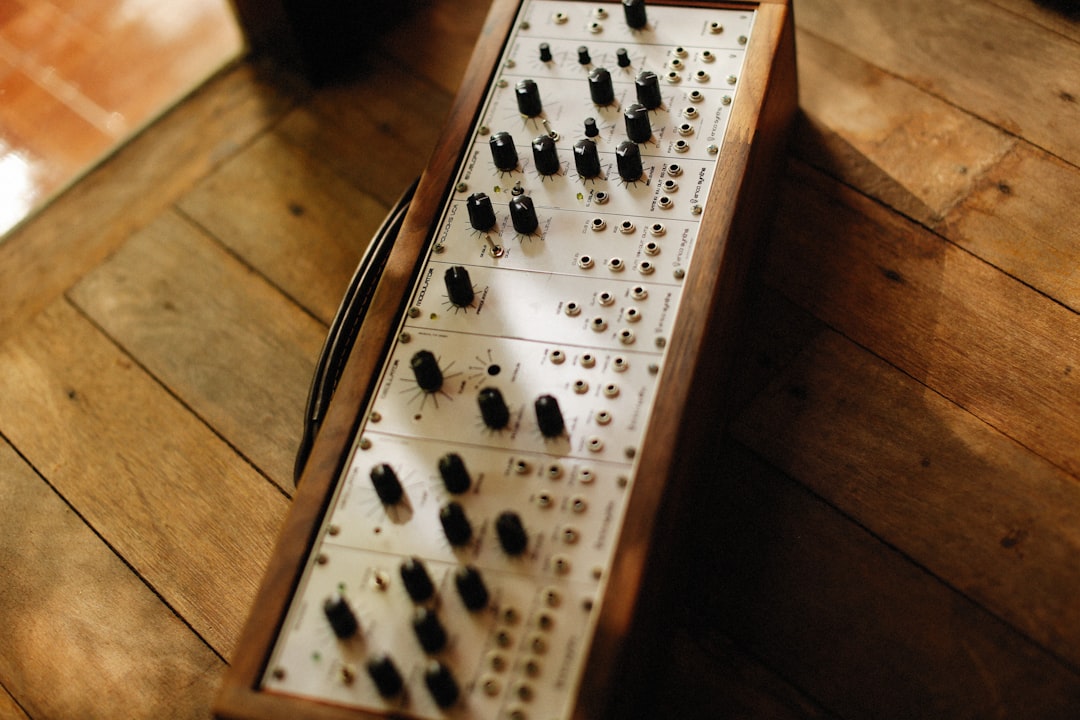
After our deep dive into u-he Repro, it’s clear that this plugin duo is a game-changer in the world of virtual analog synthesis. Whether you’re chasing the raw, punchy monophonic power of the Pro-One with Repro-1 or the lush, majestic polyphony of the Prophet-5 with Repro-5, u-he has delivered a meticulously crafted, sonically authentic, and creatively inspiring instrument.
Positives ✅
- Unparalleled sound quality that captures the warmth, grit, and character of classic analog hardware.
- Component-level modeling that brings subtle imperfections and life to every note.
- Two synths in one package covering monophonic and polyphonic needs.
- Powerful sequencer and arpeggiator in Repro-1 for rhythmic and melodic inspiration.
- Deep modulation matrix and Tweaks page for advanced sound design.
- Built-in high-quality effects that complement and polish your sounds.
- Extensive preset library curated by top sound designers.
- Active community and developer support for ongoing inspiration and help.
Negatives ❌
- High CPU usage can be challenging on older or less powerful systems.
- Steeper learning curve for beginners due to faithful analog-style interface.
- Oscillator and filter frequency readouts as percentages may confuse some users.
Our Verdict
If you’re serious about analog synthesis and want the closest you can get to vintage Sequential Circuits hardware without the maintenance headaches and price tag, u-he Repro is a must-have. It’s a sonic powerhouse that rewards exploration and will inspire your productions for years to come.
So, the question we teased earlier — can software truly replace the magic of vintage analog synths? — the answer is a resounding yes, at least in the case of Repro. It’s not just a plugin; it’s a love letter to analog synthesis, wrapped in modern flexibility and polish.
🔗 Recommended Links for Deeper Exploration
Ready to add u-he Repro to your sonic arsenal? Here are some handy shopping and resource links to get you started:
👉 Shop u-he Repro on:
Other Synths Mentioned:
- Native Instruments Monark: Amazon | NI Official
- Arturia V Collection: Amazon | Arturia Official
- Softube Model 84: Plugin Boutique | Softube Official
- Roland Cloud: Roland Official
Recommended Books on Synthesis and Sound Design:
- “Welsh’s Synthesizer Cookbook: Analog Synthesizer Programming” by Fred Welsh — Amazon
- “Power Tools for Synthesizer Programming” by Jim Aikin — Amazon
- “Sound Design: The Expressive Power of Music, Voice and Sound Effects in Cinema” by David Sonnenschein — Amazon
❓ Frequently Asked Questions (FAQ) About u-he Repro
What are the key features of the u-he Repro synthesizer that make it useful for music production?
u-he Repro stands out because it offers two distinct synths in one package — Repro-1 (monophonic) and Repro-5 (polyphonic) — both meticulously modeled at the component level to replicate the classic Sequential Circuits Pro-One and Prophet-5 sounds. Key features include:
- Component-level analog modeling for authentic oscillator drift, filter resonance, and envelope behavior.
- Powerful sequencer and arpeggiator in Repro-1 for rhythmic and melodic creativity.
- Extensive modulation matrix and Tweaks page for deep sound design flexibility.
- Built-in high-quality effects (wavefolder, delay, EQ/resonator, reverb, saturator) integrated into the synth.
- Large preset library with over 1400 presets covering a wide sonic range.
- NKS compatibility for seamless integration with Native Instruments hardware.
- Support for microtuning and MPE (MIDI Polyphonic Expression) in Repro-5.
These features make Repro a versatile tool for everything from classic analog emulation to modern experimental sound design.
Read more about “Is Diva VST Good? 🎹 The Ultimate 9-Point Breakdown (2025)”
How does the u-he Repro compare to other popular synthesizers on the market for sound design?
Compared to other virtual analog synths like Native Instruments Monark, Arturia V Collection, and Softube Model 84, u-he Repro excels in authenticity and sonic detail due to its component-level modeling approach. While Monark specializes in Minimoog tones and Arturia offers a broader collection of synth emulations, Repro focuses deeply on the Sequential Circuits lineage, delivering richer, more nuanced analog character.
Its modulation matrix and Tweaks page provide more advanced routing and customization than many competitors, allowing sound designers to push patches beyond traditional analog limits. However, this comes with a higher CPU cost and a steeper learning curve.
In short, if your priority is vintage Sequential Circuits sound with modern flexibility, Repro is the top choice. For broader synth collections or different analog flavors, other plugins might complement your setup.
What types of sounds can be created with the u-he Repro, and is it suitable for a variety of music genres?
u-he Repro is incredibly versatile. Thanks to its two synth engines and deep modulation capabilities, you can create:
- Punchy basslines and cutting leads with Repro-1’s monophonic engine.
- Lush pads, brass stabs, and polyphonic textures with Repro-5.
- Complex sequences and arpeggiations using Repro-1’s built-in sequencer.
- Experimental and evolving soundscapes via modulation matrix and Tweaks page.
- Classic 80s synthwave, pop, funk, and electronic sounds as well as modern ambient, techno, and cinematic textures.
Its sound palette fits well across genres, making it a go-to synth for producers working in electronic music, film scoring, pop production, and sound design.
Are there any notable artists or producers who use the u-he Repro in their music production workflows?
While u-he doesn’t officially publish a comprehensive artist roster, many well-known producers and sound designers have praised Repro publicly. The plugin’s reputation for authenticity and flexibility has made it a favorite among:
- Synthwave and electronic producers who want that classic analog vibe without vintage hardware hassles.
- Film and game composers seeking lush, cinematic textures reminiscent of 80s synth scores.
- Sound designers in studios worldwide who appreciate its deep modulation and effects.
Additionally, u-he’s active community forums and preset sharing platforms feature contributions from professional sound designers, some of whom work with top-tier artists. The plugin’s glowing reviews from respected outlets like MusicRadar and Computer Music Magazine further attest to its professional pedigree.
📚 Reference Links & Further Reading
- u-he Repro Official Product Page: https://u-he.com/products/repro/
- Sequential Circuits History & Products: https://www.sequential.com/wp-content/uploads/2019/04/Prophet-X-Users-Guide-1.2.pdf
- MusicRadar u-he Repro-1 Review: https://www.musicradar.com/reviews/u-he-repro-1
- Gearspace Discussion on Repro-5 vs. Softube Model 80: https://gearspace.com/board/electronic-music-instruments-and-electronic-music-production/1418369-u-he-repro-5-vs-softube-model-80-resonance.html
- Native Instruments Monark: https://www.native-instruments.com/en/products/komplete/synths/monark/
- Arturia V Collection: https://www.arturia.com/products/software-instruments/v-collection/overview
- Softube Model 84: https://www.softube.com/model-84-polyphonic-synthesizer
- Roland Cloud: https://www.roland.com/us/products/rc_roland_cloud_manager/
We hope this comprehensive review has helped you understand why u-he Repro is such a beloved instrument in the music production community. Ready to unleash your inner synth wizard? Let the analog magic begin! 🎹✨